


Opioid addiction is a problem most countries continue to grapple with today.
In the U.S. alone, more than a million people in the U.S. have died of drug overdose, the majority of which were caused by opioid intake.
For those who may not know, opioids are a class of drugs that alleviate pain and are usually prescribed by healthcare professionals to treat moderate to severe pain caused by an illness or as part of treatment for an injury or surgery.
Unfortunately, opioids are very addictive because when taken, these trigger the release of endorphins, chemicals in the brain that help alleviate pain, reduce stress, and induce a person to “feel good.”
This “feel good” feeling is powerful, but only lasts a short time, so when this effect wears off, a person might want to experience that euphoric feeling again, leading to increased opioid use and eventually, addiction.
Simply said, opioid addiction is deadly, and behind every death, statistic, and scientific explanation is a person with dreams, relationships, and potential that was unfortunately cut short.
This reality isn’t lost on everyone, as governments, non-governmental organizations, and international organizations have tried to come up with solutions to this deadly problem.
Even healthcare companies have stepped in to contribute in solving the problem of opioid addiction.
Anzen Health, one of the most recognizable names in the healthcare space, came up with its own twist in solving this problem in 2024.
Partnering with Serviceplan Group, an ad agency, Anzen Health came up with an innovative approach through a helpline created specifically to help those struggling with opioid addiction.
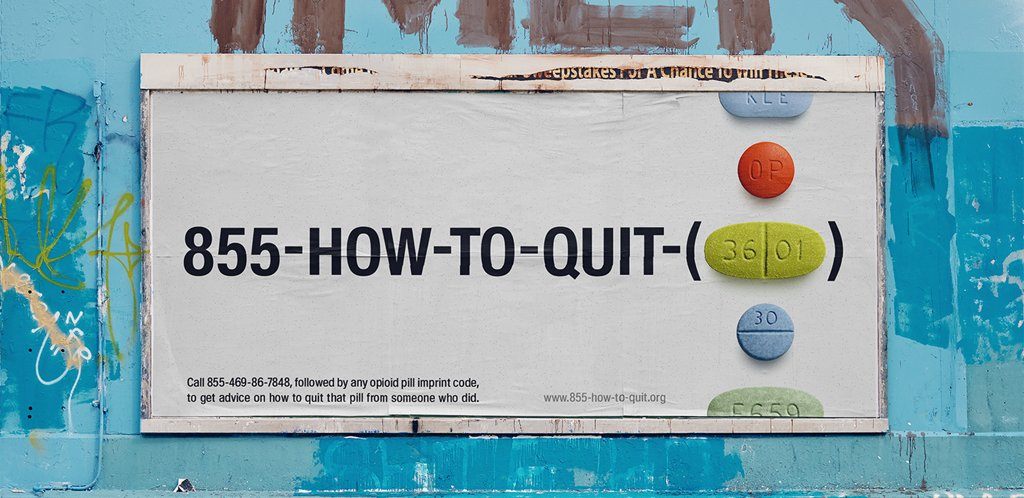
Photo from House of Communication
The 855-HOW-TO-QUIT helpline wasn’t just a run-of-the-mill hotline as it used the imprint codes found on opioid pills and had them serve as phone extensions.
For example, codeine (an opioid with the imprint code IP33) is dialed as 4733 while oxycodone (K9) is dialed as 59.
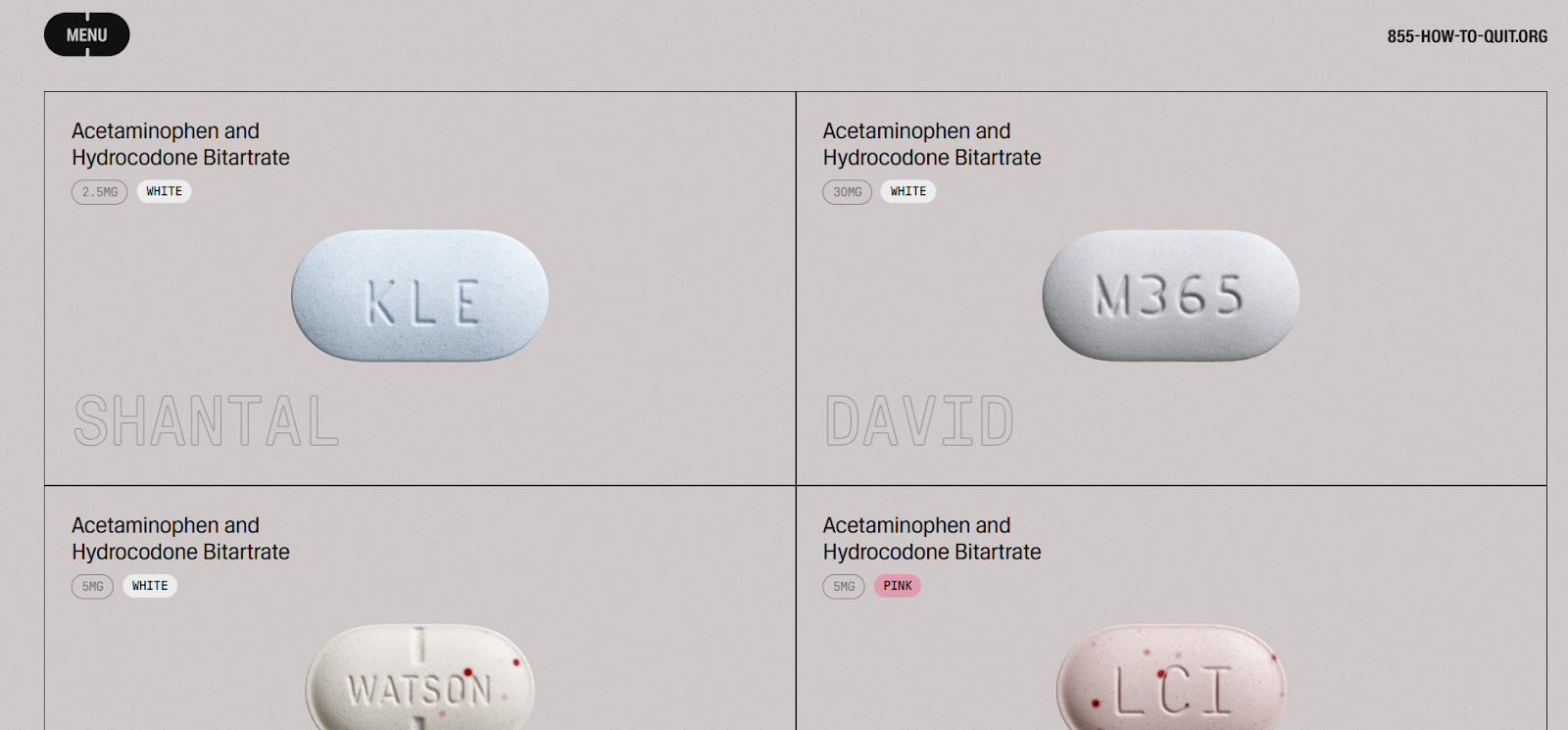
Once the helpline is dialed, callers hear a story of someone who managed to quit a specific type of opioid. Most of the time, this story would come in the form of a recording. However, there were instances when it was the survivor who would directly speak to callers.
Following this, callers will be provided with live advice from experts on how to quit and will be given treatment options nearby.
Anzen Health (in collaboration with clinics and non-governmental organizations) also used local prescription data to customize all communications to feature the most frequently used pill in a specific area.
Out-of-Home (OOH) ads were also utilized and placed near pharmacies and meeting spots for those struggling with addiction. On social media, influencers known to have quit opioids promoted the helpline to their followers.
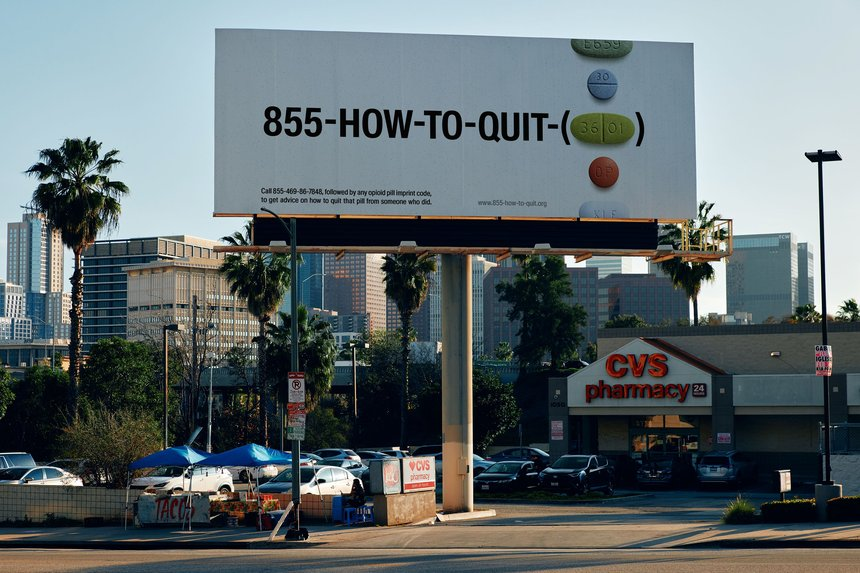
Photo from D&AD
A film was also created specifically to raise awareness about the helpline on TV.
To cap everything off, a website was designed and created to feature stories, information, and resources informing the public about Anzen Health’s initiative against opioid addiction.
So… was this campaign a success?
YES!
According to data from Serviceplan Group, the helpline generated 182 million contacts, received 42 thousand incoming calls, and was found to be more effective than traditional helplines.
As of May 2025, the helpline’s website still works and still offers visitors resources about opioid addiction.
Lastly, the 855-HOW-TO-QUIT helpline garnered citations from prestigious awards-giving bodies like D&AD and Clio Awards.
—
By turning the object of an addiction into a tool of recovery, Anzen Health was able to meaningfully and creatively reach out to its target audience.
More importantly, the helpline is a tool that helped Anzen Health shed light on a societal problem that deserves action not only from the citizenry but also from the public and private sectors.
The success of this campaign shows the versatility and effectiveness of guerrilla marketing.
So, the next time you want to shed light on a societal issue, consider leveraging this strategy!
You never know, this just might be what you need to draw much-needed attention to the initiative you’re trying to promote!
About The Dynamic Marketing Communiqué’s
“Fridays: Gorillas of Guerrilla Marketing”
Jay Conrad Levinson (1984) said that Guerrilla Marketing “works because it’s simple to appreciate, easy to execute, and inexpensive.”
Guerrilla Marketing is unconventional.
Looking beyond the traditional ways of advertising, marketers and advertisers need to spice things up in order for their brand to have campaigns that not only make an impact but also stick to their target market’s mind.
Guerrilla Marketing usually aims to have direct contact with consumers.
This type of direct contact should spark an emotional reaction that leads to consumers effectively remembering the brand.
It’s about making a big impression and making that impression last a long time (if not forever).
Guerrilla Marketing can be inexpensive.
The effect of this is being able to create a buzz around the brand, and the strategy used to market it. Almost everything is passed around through word-of-mouth.
Word-of-mouth is one of the greatest outcomes and it usually doesn’t cost anything.
This is every business’ or brand’s dream!
Every Friday, we publish tips, examples, and other useful content on unconventional ways of marketing and promotion.
Learn more about how to grab your target market’s attention and make an amazing first and lasting impression without having to spend a lot of money.
Businesses don’t really need to spend much for a guerrilla campaign. You do not need a big budget to be successful. You just need creativity and a good imagination.
Hope you find this week’s guerrilla marketing insight interesting and helpful.
Stay tuned for next Friday’s “Gorillas of Guerrilla Marketing!”
Cheers,
Dyane Diasanta
Senior Content Writer
Valens Dynamic Marketing Capabilities
Powered by VX Dynamic
www.vxdynamic.com
