


A visionary who redefined fashion…
A creative genius who brought iconic brands back to life…
A style icon whose image is etched into the annals of fashion history…
Such is the legacy of one of the most influential figures the industry has ever known. From breathing new life into legendary fashion houses to leaving behind a treasure trove of lessons for modern marketers and business leaders, this person’s impact is UNPARALLELED.
Any idea about who this is?
It’s…
Karl Lagerfeld!
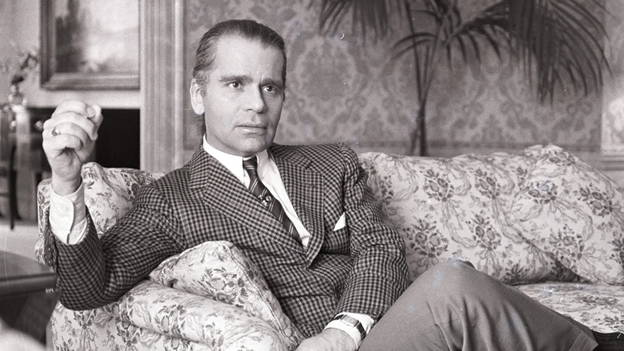
Photo from British GQ
Lagerfeld, also known as the “Kaiser,” is a maestro whose genius continues to inspire and shape the worlds of fashion and business.
Born on September 10, 1933 in Hamburg, Germany, his illustrious career spanned over six decades, during which he left an indelible mark on the fashion industry. His work as a designer, artist, and creative visionary not only transformed iconic fashion houses but also imparted invaluable lessons for marketers and business owners today.
The Rise of a Fashion Icon
Lagerfeld’s journey in the fashion scene began in the early 1950s when he moved to Paris, the heart of haute couture. His career took off after winning a design competition, which led to a job with French fashion designer Pierre Balmain.
Over the years, Lagerfeld’s talent and distinctive vision saw him work with several prestigious fashion houses, including Patou, Chloé, and Fendi.
However, it was his role as the creative director of Chanel from 1983 until his death in 2019 that truly cemented his legacy.
After all, Lagerfeld was instrumental in reviving the then-stagnant brand, seamlessly blending Coco Chanel’s timeless elegance with modern, avant-garde elements.
His innovative approach and relentless creativity ensured that Chanel remained at the forefront of fashion for decades.
Here are some key highlights of Lagerfeld’s career and influence:
- Revitalizing Chanel: When Lagerfeld took over as creative director of this fashion house, the brand was seen as a relic of the past. His transformative designs brought fresh life to Chanel, making it synonymous with contemporary luxury and style. His ability to merge classic Chanel elements with modern trends kept the brand perpetually relevant and desirable.
- Fendi’s Flourishing: At Fendi, Lagerfeld’s creative genius extended from clothing to accessories, particularly in reinventing the brand’s approach to fur. His daring and innovative designs helped Fendi become a powerhouse in luxury fashion.
- Personal Brand: Lagerfeld himself became a brand known for his unmistakable look—white hair, black sunglasses, high starched collars, and fingerless gloves. This consistent and striking image made him one of the most recognizable figures in the industry.
- Multifaceted Talent: Beyond fashion, Lagerfeld was an accomplished photographer and illustrator. He often shot campaigns for Chanel and had numerous exhibitions of his photographic work.
Now, you might be thinking:
“Lagerfeld’s influence in the fashion industry truly extends beyond the runway!”
Well, you’re right!
His approach to design, branding, and business is full of valuable insights that are helpful for business owners, leaders, and marketers of today.
… and what are these insights?
-
Innovation and Reinvention: Lagerfeld’s career is a testament to the power of continuous innovation. He never rested on his laurels and instead always sought to reinvent and refresh.
Like him, it’s important that today’s businesses embrace change, staying agile and open to new ideas to remain relevant in a rapidly evolving market.
-
Strong Personal Branding: Lagerfeld’s distinctive personal style was as iconic as his fashion designs. For marketers, this underscores the importance of a strong, consistent brand identity.
Keep in mind: A well-defined and recognizable brand can significantly enhance market presence and customer loyalty.
-
Creative Vision and Storytelling: Lagerfeld was a master storyteller, using fashion as a medium to weave compelling narratives.
What marketers can learn from this is to create engaging stories around their brands, connecting with consumers on an emotional level and building deeper relationships.
-
Work Ethic and Passion: Lagerfeld’s dedication and passion were evident in his prolific output and enduring success.
This highlights the importance of a strong work ethic and a genuine passion for one’s work—even in today’s dynamic landscape. These qualities drive excellence and inspire teams to achieve great things.
-
Global Perspective: Lagerfeld drew inspiration from a wide array of sources, reflecting a global perspective that is crucial for appealing to diverse markets.
This shows that embracing cultural sensitivity and diversity can open new avenues for growth and innovation.
-
Risk-Taking and Boldness: Lagerfeld wasn’t afraid to take risks and push boundaries. As a result, his bold decisions often set new trends and redefined fashion norms.
In the same way, businesses should be willing to take calculated risks. Why? It’s because innovation often comes from stepping outside one’s comfort zone.
We hope Lagerfeld’s story inspired you to also make a positive difference in the industry you’re in!
Clearly, his legacy is a rich tapestry of creativity, innovation, and relentless pursuit of excellence.
His contributions to fashion are monumental, but his influence reaches far beyond, offering timeless lessons for marketers and business owners.
By embracing his principles of innovation, strong branding, creative storytelling, dedication, global thinking, and boldness, you’ll be able to navigate the challenges of the modern market and build enduring, impactful brands.
Last but definitely not least…
Lagerfeld’s life and work remind us that true greatness comes not from simply relying on luck or chance; it comes from the courage to reinvent, the vision to inspire, and the passion to create.
Apply these valuable insights to your own brand or business!
About The Dynamic Marketing Communiqué’s
“Mondays: Marketing Marvels”
Too often, industry experts and the marketing press sing the praises of some brand or company’s marketing strategy.
… only for the audience to later find out that its product was a flop, or worse, that the brand or company went bankrupt.
The true ROI in marketing can’t be separated from the business as a whole.
What good is a marketing case study if one can’t prove that the company’s efforts actually paid off?
At the end of the day, either the entire business is successful or it isn’t. And the roles of marketing and communication are always paramount to that success.
Every Monday, we publish a case study that highlights the world’s greatest marketing strategies, marketers, and communicators.
However, the difference between our articles and the numerous ones out there is that we will always make certain that the firm really did generate and demonstrate earning power worthy of study in the first place in keeping with a person’s leadership skills in the area of marketing and/or communication.
We’ll also study the greatest marketing fails and analyze what they did wrong, or what they needed to improve. We all make mistakes, but better we learn from others’ mistakes—and earlier, rather than later.
Hope you find this week’s topic interesting and helpful.
Stay tuned for next Monday’s “Marketing Marvels!”
Cheers,
Adrian Kyle Vergara
Content Writer
Valens Dynamic Marketing Capabilities
Powered by VX Dynamic
www.vxdynamic.com
