


In the early days of the Internet, search engines functioned differently than they do today.
Back then, results were organized by counting how frequent search terms appeared on the page.
This wasn’t wrong, but there was certainly a better way of going about it.
… and that’s exactly what a pair of computer scientists set out to prove in 1996 with PageRank, a research project they developed when they were pursuing their doctorate degrees in Stanford University.
PageRank would eventually evolve into what we know today as Google, the world’s most dominant and widely used search engine.
Eventually, this search business evolved into Alphabet,a multi-trillion dollar tech juggernaut.
A few weeks ago, we talked about Sergey Brin, one of the co-founders behind Google.
For today’s “Marketing Marvels,” we’re going to talk about the other half of this dynamic tech duo.
His name?
Larry Page!
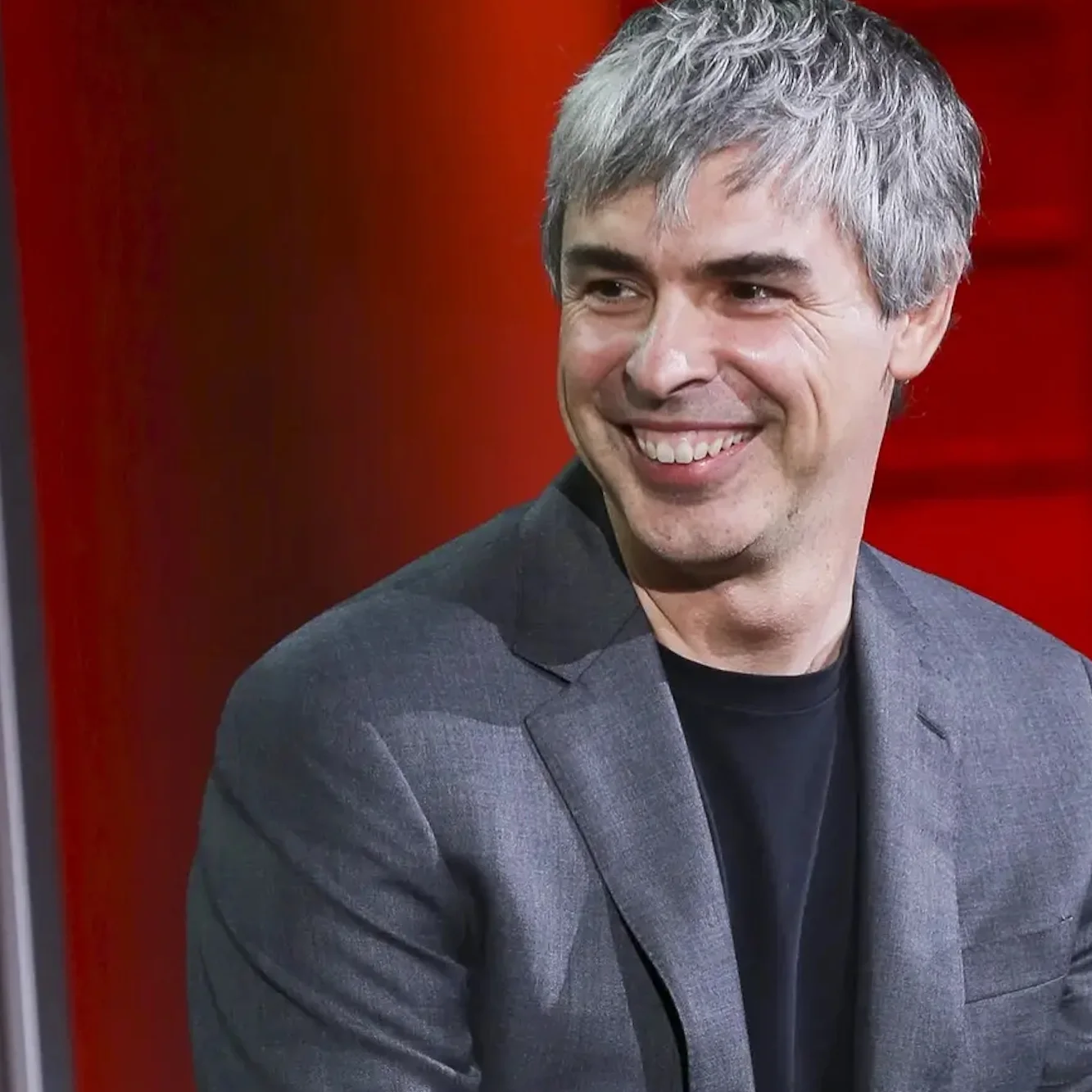
Photo from Entrepreneur
Page was born in March 1973 to parents who had a background in computer science.
As a result, he was exposed to technology magazines and computers during his formative years, imbibing in him a love for everything that had to do with tech and computers.
In 1995, Page received his bachelor’s degree in engineering with a major in computer engineering from the University of Michigan. Three years later, he earned his master of science degree in computer science from Stanford University.
Page went on to pursue a doctorate in computer science at Stanford. After enrolling in the program, he considered exploring the mathematical properties of the World Wide Web. After telling his academic advisor about this, he was encouraged to pursue his idea.
His fascination with this theme led him to take a deep dive into how web pages were linked to a page. As part of his research, he also studied the role citations played in academic publishing.
Page’s life would take a different turn when he met Sergey Brin. Together, they co-authored a research paper and worked on a project that led to the development and creation of the Google search engine.
This research project culminated in the creation of PageRank, an algorithm that determined a website’s relevance based on the number of pages and their importance that linked back to the original site.
This search engine was originally named “BackRub” because it checked backlinks to determine the importance of a website.
Simply put, the search engine ranked web pages based on relevance and authority rather than keyword matching.
The creation of this search engine was revolutionary because it addressed a problem for the earlier iterations of the Internet: How users can find reliable, authoritative, and relevant information in a packed digital landscape.
Eventually, the pair renamed the search engine they developed to Google.

Photo from Unsplash
Fast forward to 2004, Google had established itself in the tech sector through its search engine business and had become a public company through an initial public offering (IPO).
Once Google had become large enough through strategic acquisitions like YouTube and releasing services and products like the email service Gmail, ad services provider Google Ads, and the Internet browser Chrome, Page and Brin announced the restructuring of the company under the umbrella of a new parent company called Alphabet in 2015.
Brin and Page served as Alphabet’s president and chief executive officer respectively, until handing down the reins to Sundar Pichai in 2019.
Today, Alphabet operates a multi-trillion dollar empire that spans not only search engines, but also cloud computing, advertising, artificial intelligence (AI), video streaming, and others.
All of this wouldn’t have been possible if it were not for the immense contributions of Page.
That said, what are the key takeaways from his success story?
-
Adopt a “10x” Mindset
Page cultivated an identity during his active years at Google for pushing his teams towards excellence.
This “10x” mindset was initially cultivated during his undergraduate years at the University of Michigan. There, he found inspiration in a leadership program that encouraged participants to have “a healthy disregard for the impossible.”
Instead of being happy with improving a product by 10%, Page pushed his team to come up with ideas, products, and services that are ten times better than competitors.
To him, aiming for 10% is synonymous with doing what everyone else does… and while this isn’t a recipe for failure, it’s not a formula for massive success either.
-
Work on Something New and Groundbreaking
Page wasn’t just content with the continuous development of existing products.
To him, every once in a while, it was necessary to pursue “moonshot” projects which have never been thought of before.
This mindset eventually led to the creation of the X Development (formerly known as Google X) division of Alphabet responsible for investing and launching “moonshot” projects.
Waymo, an autonomous driving company initially began as a project under X Development.
Once this self-driving project proved its viability and took off, it was eventually spun off as an independent company under the umbrella of Alphabet.
With his track record of success and mindset taken into account, it’s unsurprising to know that Page is a “Marvel” in the world of tech.
His pursuit of massive growth and mindset of continuously innovating and creating something new have enabled him to reach the heights few people ever reach.
So, if you want to take your professional life to the next level, Page is definitely a “Marvel” you should look up to!
You never know, his traits just might be what you need to succeed in today’s highly innovative landscape!
About The Dynamic Marketing Communiqué’s
“Mondays: Marketing Marvels”
Too often, industry experts and the marketing press sing the praises of some brand or company’s marketing strategy.
… only for the audience to later find out that its product was a flop, or worse, that the brand or company went bankrupt.
The true ROI in marketing can’t be separated from the business as a whole.
What good is a marketing case study if one can’t prove that the company’s efforts actually paid off?
At the end of the day, either the entire business is successful or it isn’t. And the roles of marketing and communication are always paramount to that success.
Every Monday, we publish a case study that highlights the world’s greatest marketing strategies, marketers, and communicators.
However, the difference between our articles and the numerous ones out there is that we will always make certain that the firm really did generate and demonstrate earning power worthy of study in the first place in keeping with a person’s leadership skills in the area of marketing and/or communication.
We’ll also study the greatest marketing fails and analyze what they did wrong, or what they needed to improve. We all make mistakes, but better we learn from others’ mistakes—and earlier, rather than later.
Hope you find this week’s topic interesting and helpful.
Stay tuned for next Monday’s “Marketing Marvels!”
Cheers,
Adrian Kyle Vergara
Content Writer
Valens Dynamic Marketing Capabilities
Powered by VX Dynamic
www.vxdynamic.com
