

Do you think we can rely on stock price as the ultimate indicator of company performance?
According to Professor Joel Litman and Dr. Mark L. Frigo in the book, “Driven,” for many reasons, the answer is NO.
Huh? Why is that so?
It’s because most companies don’t have publicly traded stock to look at. Besides, there are literally millions of businesses in the U.S. that do not have a traded stock price.
However, an understanding of what drives stock price valuations has a lasting impact for business managers of private companies as well.
What’s more?
Professor Litman and Dr. Frigo say that even though the largest and most well-known companies in the world have stock prices to examine, a fundamental misunderstanding of stock pricing can still persist.
What Drives Stock Market Valuations
According to Professor Litman and Dr. Frigo, managers express as much confusion about stock price as there appear to be misconceptions about strategy.
In fact, CEOs of publicly-traded firms often lament the seeming disconnect between “valuation” and “reality.”
Here are some of the things they say:
“The market doesn’t understand my company.”
“We honestly have no idea what makes our company stock price go up or down. Sales are up. We thought showing large increases in net income would be good. But our stock price hasn’t moved.”
“My competitors have higher valuations. But everyone and their mother know that we are a better run, better-built company. So, I’d rather not have my employees focus on our stock price. It’s distracting more than anything else.”
Here’s the thing: There’s a difference between a “great company” and a “great stock.”
If you want to know what distinguishes one from the other, one of the things you need to be clear about is the difference between performance and valuation.
Simply said:
Performance – Historical and focuses on what the company has done.
Valuation – About the future, about hope, and about a company’s prospects and forecasts.
Let’s take a look at these examples…
Professor Litman and Dr. Frigo agree that Coca-Cola (KO) provides a great example that brings the above point home.

Photo from Simplilearn
In mid-1998, KO’s stock price traded at an incredible high of USD 88 per share. Eight years later, the company’s stock price stood at about half of that mark—USD 44.
Woah, what happened?
Could Coca-Cola have lost its incredible competitive advantages?
Did falling valuation imply poor performance?
In spite of these valuation issues, Coca-Cola continued to generate Uniform ROAs at some of the highest levels of all earning power seen across more than 5,000 companies.
So, what’s the problem with KO?
According to Professor Litman and Dr. Frigo, applying Return Driven Strategy’s (RDS) disciplined performance measurement and valuation implies a skill for deciphering the following problem:
Business profitability levels, as well as stock returns that often seem to be greatly out of sync and even totally disconnected .
The problem was not that KO had not achieved incredible performance. The problem was a question as to whether that performance was sustainable.
The disconnect between KO’s stock price and performance occurred not because the company isn’t a great one; it occurred because the stock’s valuation in 1998 was at the level of being fairly unjustifiable.
See?
According to Professor Litman and Dr. Frigo, great stock prices and great companies can accompany each other, but one needs to examine sufficiently long time periods.
Meanwhile, Ames Department Stores’ stock price run from 1996 to 2000 was “incredible.” Through that period, its shares rose more than tenfold, and investors and management seemed as happy as can be.
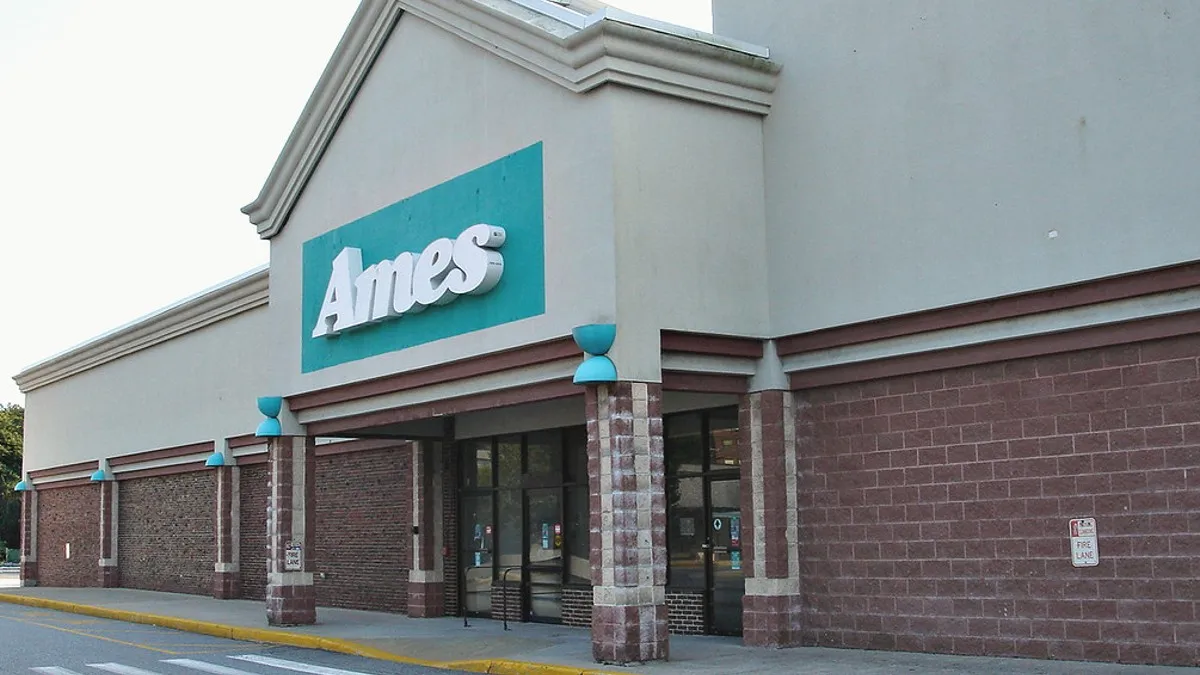
Photo from NBC Connecticut
Unfortunately, the epilogue of this retailer is described too sadly by a string of empty buildings and emptier parking lots in strip malls across the Northeastern United States.
By 2001, the firm had already been seeking bankruptcy protection.
How could posted company performance and actual company stock price send such different messages?
Here’s the thing: At Ames, investor forecasts simply exceeded reality. The original march upward from lows of USD 2 in 1996 to USD 30 and higher was not because the company was incredibly profitable.
It was because Ames began avidly restructuring, divesting its least-performing assets.
According to Professor Litman and Dr. Frigo, when a firm expected to go bankrupt doesn’t go bankrupt, its stock price rises, sometimes by leaps and bounds.
Ames’ closure shows the folly of a management team that does not understand the real drivers of stock price.
Growing a bad business is always a bad thing, no matter how well the stock price is doing. Ames’s death came relatively quickly, as its share price fell fast, and the chain finally closed for good in late 2002.
See?
That’s why Professor Litman and Dr. Frigo say great stocks aren’t often great companies and vice versa!
According to them, one must have a comprehensive understanding of the connection between strategy, execution, performance, and valuation. Besides, rigorous performance measurement is necessary for understanding TRUE business performance!
In their words:
“Without this foundation, it would be impossible to truly discern good companies from bad ones, or worthy activities from poor ones. With a thorough understanding of performance measures and valuation, an entire framework for business planning can be built.”
If you’re looking to gain a better understanding of Return Driven Strategy and Career Driven Strategy, we highly recommend checking out “Driven” by Professor Litman and Dr. Frigo.
Click here to get your copy and learn how this framework can help you in your business strategies and ultimately, in ethically maximizing wealth for your firm.
About The Dynamic Marketing Communiqué’s
“Tuesdays: Return Driven Strategy”
In the book, “Driven,” authors Professor Joel Litman and Dr. Mark L. Frigo said that the goal of every long-term successful business strategy should incorporate the combined necessity of “making the world a better place” and “getting wealthy.”
That is why they created Return Driven Strategy and Career Driven Strategy—frameworks that were built to help leaders and professionals plan and evaluate businesses so they can also help others achieve their organizational goals and career goals.
The frameworks describe the plans and actions that drive returns for anyone in an organization such as independent contractors, marketers, brand managers, communicators, and other people in any field. These actions lead to the creation of wealth and value for customers, employees, shareholders, and the society.
Every Tuesday, we’ll highlight case studies, business strategies, tips, and insights related to Return Driven Strategy and Career Driven Strategy.
In planning, building, or managing brands and businesses, these strategies, case studies, and guidelines will help you choose what specific actions to take and when to take them.
Hope you find this week’s topic interesting and helpful.
Stay tuned for next Tuesday’s “Return Driven Strategy!”
Cheers,
Adrian Kyle Vergara
Content Writer
Valens Dynamic Marketing Capabilities
Powered by VX Dynamic
www.vxdynamic.com
