


There’s something undeniably magnetic about those who operate with absolute confidence—the kind of people who walk into a room and command attention… not with loud words or flashy gestures, but with sheer presence.
These people don’t follow the rules; they make their own.
They disrupt the status quo, carve out their own path, and somehow, against all odds, come out on top.
In business, we call these people disruptors.
In marketing, we call them visionaries.
… and in the streets of fictional Baltimore, he is simply known as “Omar.”
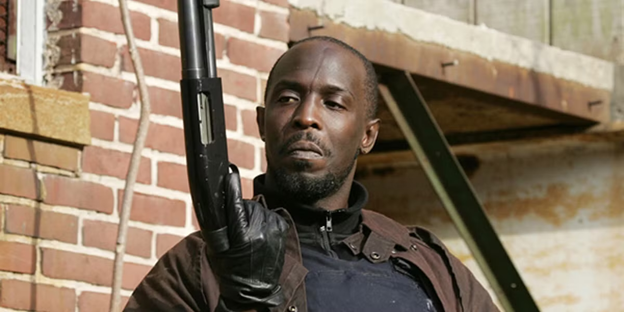
Photo from CBR
Omar Little, the legendary stick-up man from HBO’s “The Wire,” wasn’t just another character in a crime drama. He was a master strategist, a brand unto himself, and a living lesson in how to build influence.
Little may not have been running a Fortune 500 company, but his approach to survival and dominance offers some surprisingly sharp business and marketing insights.
Let’s break them down.
-
Build a Distinct and Memorable Brand
In the series, Little didn’t just rob drug dealers—he became the name in the game.
His signature trench coat, shotgun, and whistling of the song, “Farmer in the Dell” created an aura of legend.
Basically, everyone knew who Little was, what he stood for, and what would happen if they crossed his path.
Similarly, in business, branding is everything. Whether it’s a personal brand or a corporate one, consistency and distinctiveness set you apart from the competition.
-
Reputation is Your Greatest Asset
Little didn’t need an army; his name alone commanded respect.
People feared him not because he was the biggest or most violent, but because his track record spoke for itself.
In business and marketing, credibility is KING. If your customers trust you and if your brand carries weight, you don’t have to overspend on advertising—your reputation will do the work for you.
-
Find a Niche and Own It
Little operated outside the typical structures of fictional Baltimore’s drug economy. He didn’t sell drugs; he robbed those who did.
In short, he found a unique angle, one that no one else dared to take, and owned it.
In business, it’s crucial to know that the most successful companies don’t just enter existing markets—they create their own.
Think of how Tesla disrupted the auto industry or how Netflix revolutionized entertainment…
The key is to find what others aren’t doing and dominate that space.
-
Stay True to Your Code
Despite being deemed as a criminal, Little had an unshakable moral code. He never harmed innocent people, and he lived by a strict set of principles.
This consistency made him respected and, in some cases, even admired.
What can we learn from this?
In business, companies that stick to their core values build strong customer loyalty.
Think about this: Consumers today care about ethics and authenticity. Therefore, brands that stand for something bigger than profit—whether it’s sustainability, social justice, or transparency—earn trust and longevity.
-
Leverage Fear (or Urgency) as a Strategy
Whenever people heard Little was coming, they panicked. His mere presence forced people to react, often making costly mistakes.
In marketing, creating a sense of urgency can drive action.
Limited-time offers, scarcity tactics, and exclusivity all push consumers towards making a decision.
Remember: When people feel like they must act now, they do.
-
Adapt and Stay Ahead of the Competition
Little wasn’t just bold—he was also smart. He constantly adjusted his tactics, outthinking enemies who underestimated him.
He knew when to strike, when to retreat, and when to change his approach.
Like him, businesses that anticipate market shifts and evolve (think Apple’s transition from computers to mobile devices) stay ahead.
That’s because adaptability isn’t optional; it’s a necessity.
-
Know When to Walk Away
Unlike many characters in “The Wire,” Little wasn’t driven by greed. He took what he needed and knew when to lay low.
In business, knowing when to pivot, downsize, or even exit a market can mean the difference between long-term success and failure.
Many companies collapse because they overexpand or refuse to change course when necessary.
In summary…
Little wasn’t your typical businessman, but his strategic thinking, brand presence, and disciplined approach to his craft make him an unexpected masterclass in business and marketing.
So, whether you’re an entrepreneur, marketer, or leader, there’s something to learn from his playbook (we don’t mean you also have to be deemed as a criminal, though)!
Just stand out, build credibility, stay adaptable, and always play the long game.
… because in business—just like in the streets—the game is always changing, and in this sphere, only the smartest survive and thrive.
About The Dynamic Marketing Communiqué’s
“Mondays: Marketing Marvels”
Too often, industry experts and the marketing press sing the praises of some brand or company’s marketing strategy.
… only for the audience to later find out that its product was a flop, or worse, that the brand or company went bankrupt.
The true ROI in marketing can’t be separated from the business as a whole.
What good is a marketing case study if one can’t prove that the company’s efforts actually paid off?
At the end of the day, either the entire business is successful or it isn’t. And the roles of marketing and communication are always paramount to that success.
Every Monday, we publish a case study that highlights the world’s greatest marketing strategies, marketers, and communicators.
However, the difference between our articles and the numerous ones out there is that we will always make certain that the firm really did generate and demonstrate earning power worthy of study in the first place in keeping with a person’s leadership skills in the area of marketing and/or communication.
We’ll also study the greatest marketing fails and analyze what they did wrong, or what they needed to improve. We all make mistakes, but better we learn from others’ mistakes—and earlier, rather than later.
Hope you find this week’s topic interesting and helpful.
Stay tuned for next Monday’s “Marketing Marvels!”
Cheers,
Adrian Kyle Vergara
Content Writer
Valens Dynamic Marketing Capabilities
Powered by VX Dynamic
www.vxdynamic.com
