


Imagine living in a world where the impossible is just an invitation to try harder.
—a world where rockets can be reused like delivery trucks, where cars drive themselves, and where your brain might one day talk to your computer.
Sounds like science fiction, right?
However, for one individual, this has been business as usual—not because he was told it was doable, but because he believed in asking a better question:
“What if it could be?”
You see, some careers are built on reliability or on connections. However, the most iconic paths are often paved by those who dare to innovate their offerings.
This is the very principle behind Tenet 4 of the Career-Driven Strategy (CDS) framework by Professor Joel Litman and Dr. Mark L. Frigo.
Perhaps, there’s no better embodiment of this idea than the man who’s redefined cars, rockets, payments, AI, and ambition itself:
Elon Musk!
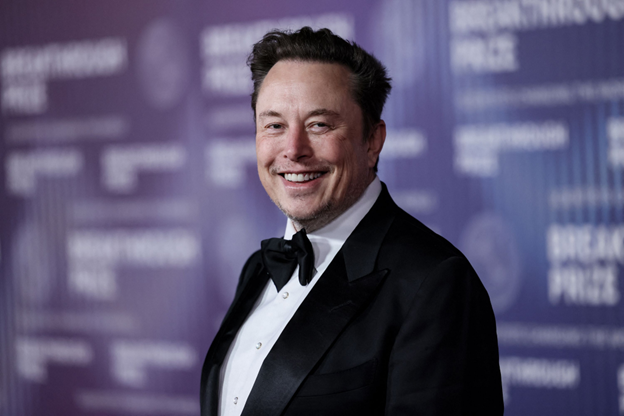
Photo from Biography
Musk is a tech visionary, entrepreneur, and engineer born in Pretoria, South Africa, in 1971. Long before he became a household name, he was an unusually curious child, once reading the entire Encyclopedia Britannica and teaching himself computer programming by the age of 12.
After moving to the U.S. and studying at the University of Pennsylvania, he launched into the startup world just as the Internet was beginning to explode.
Musk’s career is an unrelenting quest to solve big problems.
Yet, what truly sets him apart is his approach: He doesn’t just enter industries; he reinvents them.
In other words, his career is a masterclass in CDS’ Tenet 4: Innovate Offerings.
Here are a few examples of how he innovated his offerings:
PayPal: Redefining Online Transactions
Before the Teslas and rockets, there was X.com, Musk’s first major venture in the U.S., which he co-founded in 1999.
The idea was radical at the time: An online bank that could transfer money via email.
After merging with Confinity, it became PayPal, revolutionizing e-commerce and paving the way for modern digital payments.
Musk saw what banks and payment systems lacked back then—speed, convenience, and digital trust—and turned it into a user-friendly, secure tool.
Simply said, he didn’t just offer a financial product; he innovated how people think about money online.
CDS Connection: Instead of fitting into the mold of traditional finance, Musk shaped a new offering. He didn’t aim to improve the system; he sought to reinvent it. That’s the heart of Tenet 4.
Tesla: Turning Electric Dreams into Reality
By the early 2000s, electric cars were dismissed as impractical and uninspiring. However, Musk thought differently.
He joined Tesla Motors in 2004 as chairman and later became CEO, steering the company toward producing sleek, high-performance electric vehicles (EVs) with long ranges and autonomous features.
Today, Tesla is not just an automaker but also a tech company on wheels. With over-the-air software updates, autonomous driving capabilities, and a global network of Superchargers, Tesla offers an entire mobility ecosystem.
CDS Connection: Tenet 4 asks professionals to continually enhance and evolve the value they bring. Musk didn’t stop at “making electric cars.” He redefined what vehicles could be—fast, smart, and connected. That’s innovation at its purest!
SpaceX: Making Space Travel Commercial—and Cool
Perhaps Musk’s most ambitious venture is SpaceX, which he founded in 2002.
His goal? To colonize Mars.
His starting point? Reduce the cost of spaceflight by building reusable rockets.
In 2015, the Falcon 9 rocket successfully landed upright after launch—a feat once considered impossible. Since then, SpaceX has become a National Aeronautics and Space Administration (NASA) partner, launched satellites, transported astronauts, and even built a prototype of the Starship.
CDS Connection: Innovating your offerings means never settling for industry norms. Musk didn’t just challenge how rockets were built; he also redefined the entire supply chain, design, and business model.
He literally changed the trajectory of space travel!
Neuralink, xAI, and The Boring Company: Expanding the Boundaries of Innovation
Where most entrepreneurs stop at one or two ventures, Musk multiplies.
With Neuralink, he explores brain-computer interfaces. With The Boring Company, he aims to beat traffic with underground tunnels. With xAI, he dives into artificial intelligence to build “truth-seeking” systems.
None of these projects are the safe or obvious choice… but that’s what makes them aligned with CDS Tenet 4—they’re entirely new offerings, not rehashes of what already exists.
The Power of Innovating Offerings
Professor Litman and Dr. Frigo’s CDS teaches that to thrive, professionals must innovate what they offer to the world.
In other words, doing your job well isn’t enough; you also need to think differently, solve creatively, and evolve constantly.
Elon Musk’s career exemplifies this tenet: He doesn’t ask, “What’s been done?”
Instead, he asks, “What hasn’t been done yet—and why not?”
Whether it’s introducing a new product, automating a process, or launching an entirely new way of thinking, Musk repeatedly proves that innovation isn’t optional; it’s essential.
So, what can you learn from Musk’s story and strategy?
Basically, you don’t have to build rockets or electric cars to apply Tenet 4. Innovation can happen at any level—in your role, your industry, your personal brand.
So, ask yourself:
“What can I offer that no one else does?”
“What’s broken in my field, and how can I fix it?”
“How can I reinvent, not just participate?”
Take note that Musk’s success is not rooted in luck or genius alone. It’s rooted in a willingness to question norms, break molds, and relentlessly innovate.
That’s what Tenet 4 is all about!
… and if you’re willing enough, that’s a blueprint you can follow.
—
If you’re looking to gain a better understanding of Return Driven Strategy and Career Driven Strategy, we highly recommend checking out “Driven” by Professor Litman and Dr. Frigo.
Click here to get your copy and learn how this framework can help you in your business strategies and ultimately, in ethically maximizing wealth for your firm.
About The Dynamic Marketing Communiqué’s
“Tuesdays: Return Driven Strategy”
In the book, “Driven,” authors Professor Joel Litman and Dr. Mark L. Frigo said that the goal of every long-term successful business strategy should incorporate the combined necessity of “making the world a better place” and “getting wealthy.”
That is why they created Return Driven Strategy and Career Driven Strategy―frameworks that were built to help leaders and professionals plan and evaluate businesses so they can also help others achieve their organizational goals and career goals.
The frameworks describe the plans and actions that drive returns for anyone in an organization such as independent contractors, marketers, brand managers, communicators, and other people in any field. These actions lead to the creation of wealth and value for customers, employees, shareholders, and the society.
Every Tuesday, we’ll highlight case studies, business strategies, tips, and insights related to Return Driven Strategy and Career Driven Strategy.
In planning, building, or managing brands and businesses, these strategies, case studies, and guidelines will help you choose what specific actions to take and when to take them.
Hope you find this week’s topic interesting and helpful.
Stay tuned for next Tuesday’s “Return Driven Strategy!”
Cheers,
Adrian Kyle Vergara
Content Writer
Valens Dynamic Marketing Capabilities
Powered by VX Dynamic
www.vxdynamic.com
