
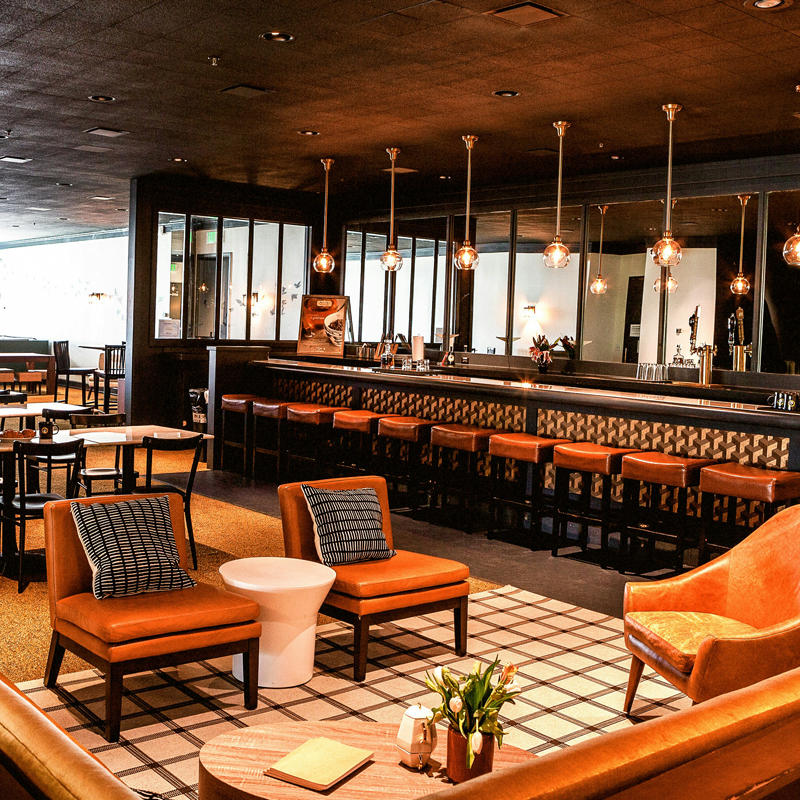

Millions of Americans flock to their favorite restaurant chains each day to enjoy a meal by themselves or with their loved ones… and as a result, the food service industry has become a highly lucrative and competitive market, generating over USD 2.6 trillion in sales in 2024.
That said, restaurants often operate on razor-thin margins, and have little room to maneuver when food costs rise due to inflation. Restaurant operations also require substantial labor, creating additional pressures that further squeeze profitability.

Photo from Unsplash
More importantly, restaurant profitability is highly dependent on attendance. When consumers eat less, margins get squeezed further.
In fact, U.S. restaurants experienced one of their weakest six-month sales growth periods in a decade during the first half of 2025.
Given this backdrop, restaurant chains will do whatever they can to make sure their customers will continue to patronize their products.
This can come in the form of special offers, time-limited menu items, and even discounted meals.
However, aside from those avenues, restaurants will attempt to pull off rebrands in an attempt to retain customers, attract new ones, and consequently, improve profits.
Rebrands can be a powerful tool to bring relevance to a once-great brand that’s starting to stagnate. But it must be pulled off the right way.
Acting As A Bridge to Customers
Professor Joel Litman and Dr. Mark L. Frigo in the book, “Driven,” talked about the importance of branding. According to them, “successful firms create a bridge between the customers’ knowledge of the offering and their explicit awareness of their unmet need.”
Branding activities, when done right, builds an emotional connection between consumers and the offerings that uniquely fulfill their needs.
That’s why no matter how many competitors come into the scene or no matter how much prices change, customers will continue to flock to a business that has successfully built a brand that forms emotional attachments and evokes positive memories with its target audience.
Since branding is such a powerful business activity, once-great businesses often turn to it when they’re attempting to recapture their old glory.
However, not every rebranding effort is guaranteed to succeed, and this legacy restaurant chain found that out the hard way.
A Rebranding Effort Gone Wrong
Earlier this year, Cracker Barrel, a Tennessee-based restaurant chain, made headlines for all the wrong reasons as it lost nearly USD 100 million in market value after it earned the ire of investors and even long-time patrons.
The controversy stemmed from the release of a redesigned logo.
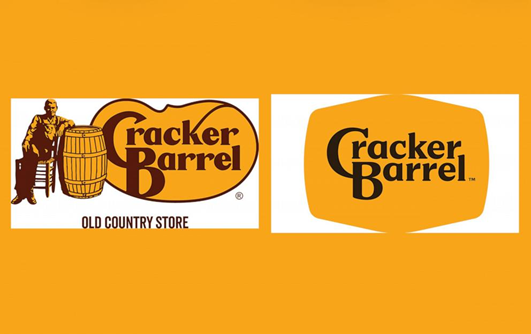
Old logo (left) & Redesigned logo (right)
Photo from ABC News
Cracker Barrel created a unique brand image by adopting an old country-inspired identity, reflected in vintage decor, home cooking-inspired dishes, and a logo depicting a sitting gentleman leaning against a barrel.
Since 2023, Cracker Barrel’s leadership has been pursuing a transformation of its business, and this has consequently led to attempts at shedding its rustic brand image to attract a younger audience.
In remodeled restaurants, vintage decors have given way to a more modern atmosphere and the menu has been simplified and altered to accommodate seasonal offerings.
The most recent move in Cracker Barrel’s ongoing brand refresh came in the form of a logo change that replaced the iconic barrel design with a cleaner, text-only design featuring its name.
In response, long-time customers complained that the redesigned logo was a departure from the legacy chain’s “country roots,” while experts pointed out that a rebrand can damage brand identity and turn off long-time customers.
Meanwhile, conservative pundits accused the company of turning its back on American values.
The negative response immediately resulted in a nearly USD 94 million dollar drop in market value and a company-issued apology for the logo change, emphasizing that this change was part of a broader plan that’s expected to pay off by 2027.
As a result of the negative backlash, the chain reverted its logo change completely, deciding to stick with its classic brand image.
That’s not all…
Weeks after it reverted its logo change, Cracker Barrel halted the remodelling plans for over 600 locations, as the initial plan to do so didn’t sit well with long-time customers.
Rebrands Shouldn’t Alienate an Existing Customer Base
Cracker Barrel’s rebranding efforts wasn’t an impulsive one, as it’s a business that has slowly declined throughout the 2020s so far.
However, its efforts to reinvent and reinvigorate its business grabbed headlines for the wrong reasons and it was punished accordingly.
The key takeaway?
While transformations are essential to turning struggling businesses around, they cannot come at the cost of losing touch with long-time customers and abandoning the qualities that made a company a success in the first place.
In today’s consumer landscape where brand identity is of utmost importance, the most effective transformations should focus on building up existing strengths rather than abandoning them entirely.
—
If you’re looking to gain a better understanding of Return Driven Strategy and Career Driven Strategy, we highly recommend checking out “Driven” by Professor Litman and Dr. Frigo.
Click here to get your copy and learn how this framework can help you in your business strategies and ultimately, in ethically maximizing wealth for your firm.
About The Dynamic Marketing Communiqué’s
“Tuesdays: Return Driven Strategy”
In the book, “Driven,” authors Professor Joel Litman and Dr. Mark L. Frigo said that the goal of every long-term successful business strategy should incorporate the combined necessity of “making the world a better place” and “getting wealthy.”
That is why they created Return Driven Strategy and Career Driven Strategy―frameworks that were built to help leaders and professionals plan and evaluate businesses so they can also help others achieve their organizational goals and career goals.
The frameworks describe the plans and actions that drive returns for anyone in an organization such as independent contractors, marketers, brand managers, communicators, and other people in any field. These actions lead to the creation of wealth and value for customers, employees, shareholders, and the society.
Every Tuesday, we’ll highlight case studies, business strategies, tips, and insights related to Return Driven Strategy and Career Driven Strategy.
In planning, building, or managing brands and businesses, these strategies, case studies, and guidelines will help you choose what specific actions to take and when to take them.
Hope you find this week’s topic interesting and helpful.
Stay tuned for next Tuesday’s “Return Driven Strategy!”
Cheers,
Adrian Kyle Vergara
Content Writer
Valens Dynamic Marketing Capabilities
Powered by VX Dynamic
www.vxdynamic.com
