


Do you ever notice how the people you least expect often make the biggest moves?
The ones everyone overlooks, underestimates, or writes off entirely—yet somehow, they turn the game on its head.
They don’t rely on brute strength, flashy resources, or sheer size to win.
Instead, they wield something far more powerful: Strategy, wit, and the uncanny ability to read people and situations like an open book.
In business, marketing, or personal branding, this kind of savvy is pure gold. It’s the difference between being just another player in the market and being the one everyone else is trying to catch up with.
To see this in action, we can look at Tyrion Lannister, a character from “Game of Thrones” whose life story is surprisingly rich with lessons for leaders, marketers, and strategists.
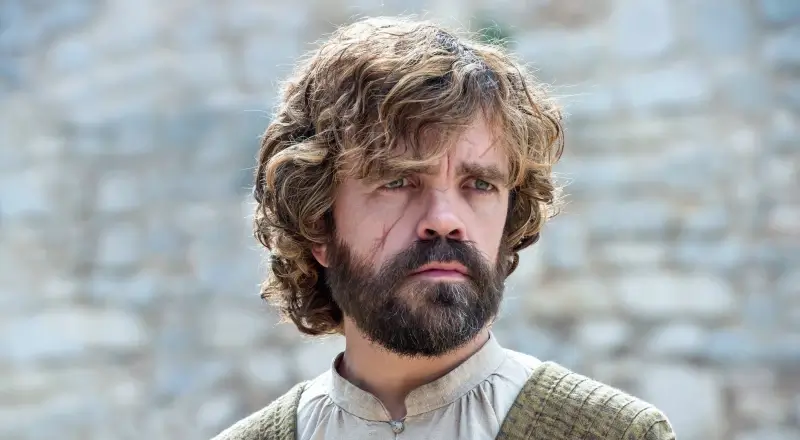
Photo from CharacTour
The Outsider with a Mind Like a Sword
Lannister comes from one of the wealthiest and most influential families in Westeros. He is privileged in some ways and marginalized in others.
Born into a family obsessed with power, reputation, and appearances, Lannister grew up constantly reminded of his differences.
While his siblings wielded strength, charm, and traditional advantages, he faced ridicule for being a dwarf—a label that could have easily defined him.
… but that was not the end of his story.
In fact, he turned this challenge into his greatest asset: Intellect, observation, and the ability to think several moves ahead of everyone else.
Sharp-tongued and quick-witted, he learned early that words—strategically chosen—could achieve far more than brute force.
Despite betrayals, near-death experiences, and constant underestimation, Lannister not only survived but thrived, using his cunning as a form of influence and power.
Think about this: Lannister’s world is chaotic, competitive, and ruthless. Alliances shift overnight, trust is fragile, and a single misstep can cost everything.
In such an environment, adaptability is not optional; it’s essential.
From this crucible, Lannister developed skills that are surprisingly applicable to business today:
- Leveraging weaknesses as advantages (turning perceived limitations into strategic tools)
- Building networks of allies (carefully cultivating relationships to maximize influence)
- Communicating effectively under pressure (delivering messages that persuade, inspire, or manipulate as needed)
- Planning several steps ahead (anticipating moves and counter-moves in high-stakes scenarios)
These aren’t just survival skills; they’re also the blueprint for leadership, business strategy, and marketing mastery.
Let’s see how we can apply these in the modern world of business and marketing:
-
Turn Weaknesses into Strengths
Lannister was underestimated because of his stature, yet he consistently used this to his advantage. In business, a perceived disadvantage—whether a small team, limited budget, or unconventional brand—can be turned into a unique selling point.
-
Influence Trumps Authority
Titles and resources don’t always guarantee results. Lannister shows that understanding people—their desires, fears, and motivations—is more powerful than raw authority. This is key for marketers, negotiators, and leaders alike.
-
Strategy Beats Brute Force
Lannister rarely fought with strength. Instead, he relied on clever tactics, timing, and foresight—like using wildfire to defend King’s Landing. In marketing, strategic planning and positioning often outperform simply “outspending” the competition.
-
Build and Leverage Alliances
Lannister relied on allies like Varys and Bronn, knowing that strategic partnerships amplify influence and mitigate risks. Similarly, collaborations, influencer relationships, and strong networks are critical in modern business.
-
Communicate with Precision and Impact
Words were Lannister’s sword. His speeches and witticisms inspired loyalty, provoked thought, and sometimes manipulated rivals. For brands, a clear and memorable messaging can be far more influential than flashy visuals or big budgets.
-
Adaptability is Non-Negotiable
With shifting political landscapes and constant threats, Lannister thrived because he adapted without losing sight of his goals. Businesses must pivot in response to market changes while maintaining their core mission.
-
Reputation Is an Asset
Lannister’s wit, intelligence, and moral compass helped build his reputation as a trusted advisor. In business, a strong and trustworthy reputation can be one of your most valuable assets.
See?
Lannister’s story reminds us that intelligence, strategy, and empathy can outperform size, force, or brute authority.
In business and marketing, the lessons are clear:
- Think ahead and anticipate moves.
- Use every perceived weakness as leverage.
- Build relationships strategically.
- Communicate with clarity and wit.
- Adapt constantly without losing sight of your goals.
The modern marketplace can be just as unpredictable as Westeros, but the principles of surviving—and thriving—remain the same.
… and sometimes, it’s the underestimated underdog who ultimately changes the game.
About The Dynamic Marketing Communiqué’s
“Mondays: Marketing Marvels”
Too often, industry experts and the marketing press sing the praises of some brand or company’s marketing strategy.
… only for the audience to later find out that its product was a flop, or worse, that the brand or company went bankrupt.
The true ROI in marketing can’t be separated from the business as a whole.
What good is a marketing case study if one can’t prove that the company’s efforts actually paid off?
At the end of the day, either the entire business is successful or it isn’t. And the roles of marketing and communication are always paramount to that success.
Every Monday, we publish a case study that highlights the world’s greatest marketing strategies, marketers, and communicators.
However, the difference between our articles and the numerous ones out there is that we will always make certain that the firm really did generate and demonstrate earning power worthy of study in the first place in keeping with a person’s leadership skills in the area of marketing and/or communication.
We’ll also study the greatest marketing fails and analyze what they did wrong, or what they needed to improve. We all make mistakes, but better we learn from others’ mistakes—and earlier, rather than later.
Hope you find this week’s topic interesting and helpful.
Stay tuned for next Monday’s “Marketing Marvels!”
Cheers,
Adrian Kyle Vergara
Content Writer
Valens Dynamic Marketing Capabilities
Powered by VX Dynamic
www.vxdynamic.com
