
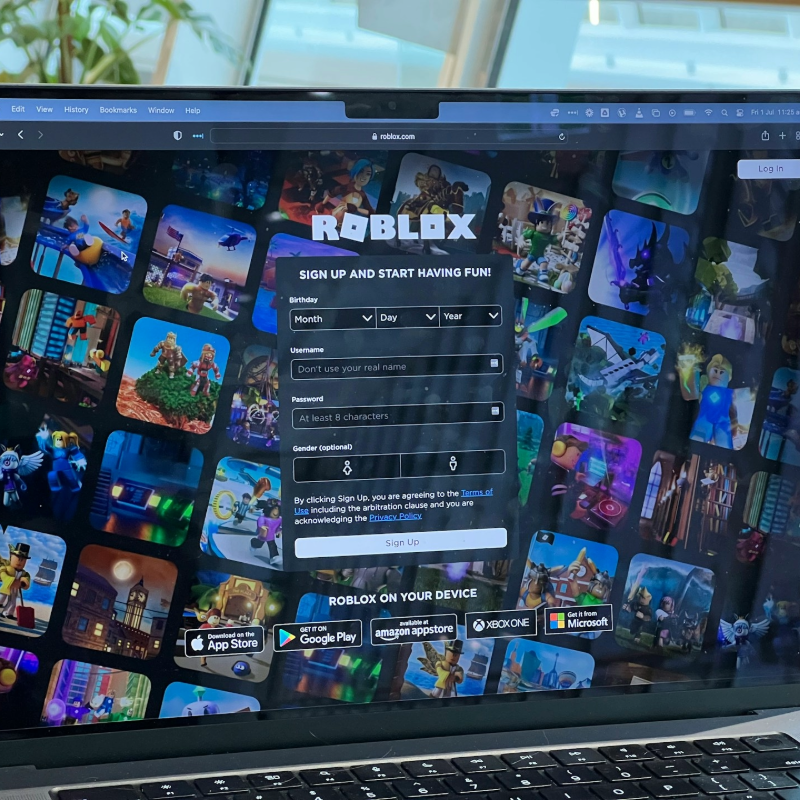

Art occupies an important place in society as it serves as a platform for expressing creativity and communicating ideas.
Artistic works expose members of society to ideas that entertain, challenge, and inspire all at the same time.
Yet despite its importance, art has seen a decline in importance among the youth in recent years.
While it’s easy to point to social media and the rise of other entertainment mediums as culprits, there’s another reason as to why art is seeing less importance.
Art is seeing less emphasis in school systems across the globe partly due to funding cuts and increasing emphasis on Science, Technology, Engineering, and Mathematics (STEM) subjects.
With all these, it becomes increasingly challenging to showcase art to the youth.
This is why in 2023, telecommunications firm Verizon and the Metropolitan Museum of Art (commonly known as the Met), teamed up to bridge the gap in art education and foster curiosity about the arts among the youth.
How?
By digitizing pieces of art and other culturally-significant artifacts!
… and here’s the twist: This virtual recreation was hosted on Roblox, a popular video game among teens!
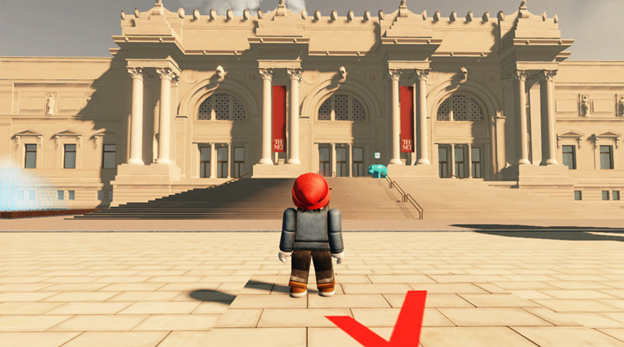
Image from the Metropolitan Museum of Art
Roblox is a popular video game among teenagers under the age of 19.
The game is highly popular among younger demographics because players can create custom games on the platform, which can be shared to other players.
Within these custom games, called “experiences,” users can recreate real-world and fictional events, places, and objects!
… and this unique feature of Roblox is what made it the ideal platform to host the digital recreations of artifacts and art pieces featured in the Met.
Here’s how the Met and Verizon pulled it off:
Both parties worked with curators who had galleries within the Met to digitize 40 real-world artifacts into Roblox items.
Once these artifacts were converted into Roblox items, the Met and Verizon created an app that sent children on an educational scavenger hunt within the museum.
To make things fun, over 152 educational clues were scattered throughout the Met. Users who were able to follow clues were led to artworks that could be scanned and unlocked on Roblox.
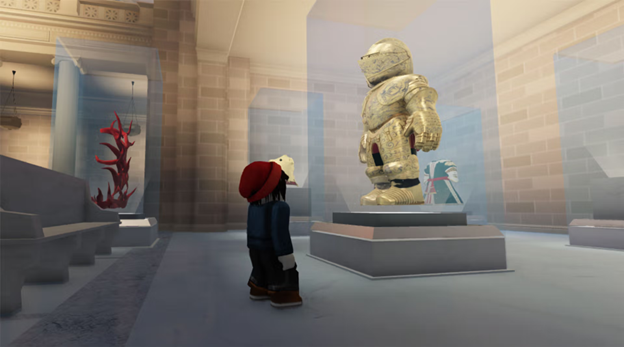
Image from the Metropolitan Museum of Art
A virtual recreation of the Met and a few of its exhibits were also made available on Roblox for visitors and those who couldn’t make it to the Met physically.
To generate hype before the launch of the app and the Roblox exhibit, creative assets were posted on the Met’s social media accounts, website announcements were deployed, and marketing cards and digital displays were put in place in the museum.
These promotional materials contained a call-to-action and a QR code that let museum visitors download the app.
Leading up to the launch of the exhibit, the campaign team began advertising using creative assets on The Met social handles, website comms, and museum stanchions.
So, was all this effort worth it?
The answer is a resounding YES!
The Met and Verizon’s campaign delivered a 35% increase in foot traffic. It also led to an additional 200,000 new visitors for the Met.
Last but not least, the campaign generated 1.4 billion impressions, a clear sign that it made waves on social media!
—
There is no denying that interest in the arts has waned in recent years. Yet, today’s always-on, digitally driven landscape holds the key to reversing that trend.
You don’t need to just take our word for it; the results from the Met and Verizon’s campaign speak for themselves.
More importantly, the campaign’s success presents a blueprint for fostering art appreciation among a younger audience.
About The Dynamic Marketing Communiqué’s
“Fridays: Gorillas of Guerrilla Marketing”
Jay Conrad Levinson (1984) said that Guerrilla Marketing “works because it’s simple to appreciate, easy to execute, and inexpensive.”
Guerrilla Marketing is unconventional.
Looking beyond the traditional ways of advertising, marketers and advertisers need to spice things up in order for their brand to have campaigns that not only make an impact but also stick to their target market’s mind.
Guerrilla Marketing usually aims to have direct contact with consumers.
This type of direct contact should spark an emotional reaction that leads to consumers effectively remembering the brand.
It’s about making a big impression and making that impression last a long time (if not forever).
Guerrilla Marketing can be inexpensive.
The effect of this is being able to create a buzz around the brand, and the strategy used to market it. Almost everything is passed around through word-of-mouth.
Word-of-mouth is one of the greatest outcomes and it usually doesn’t cost anything.
This is every business’ or brand’s dream!
Every Friday, we publish tips, examples, and other useful content on unconventional ways of marketing and promotion.
Learn more about how to grab your target market’s attention and make an amazing first and lasting impression without having to spend a lot of money.
Businesses don’t really need to spend much for a guerrilla campaign. You do not need a big budget to be successful. You just need creativity and a good imagination.
Hope you find this week’s guerrilla marketing insight interesting and helpful.
Stay tuned for next Friday’s “Gorillas of Guerrilla Marketing!”
Cheers,
Dyane Diasanta
Senior Content Writer
Valens Dynamic Marketing Capabilities
Powered by VX Dynamic
www.vxdynamic.com
