
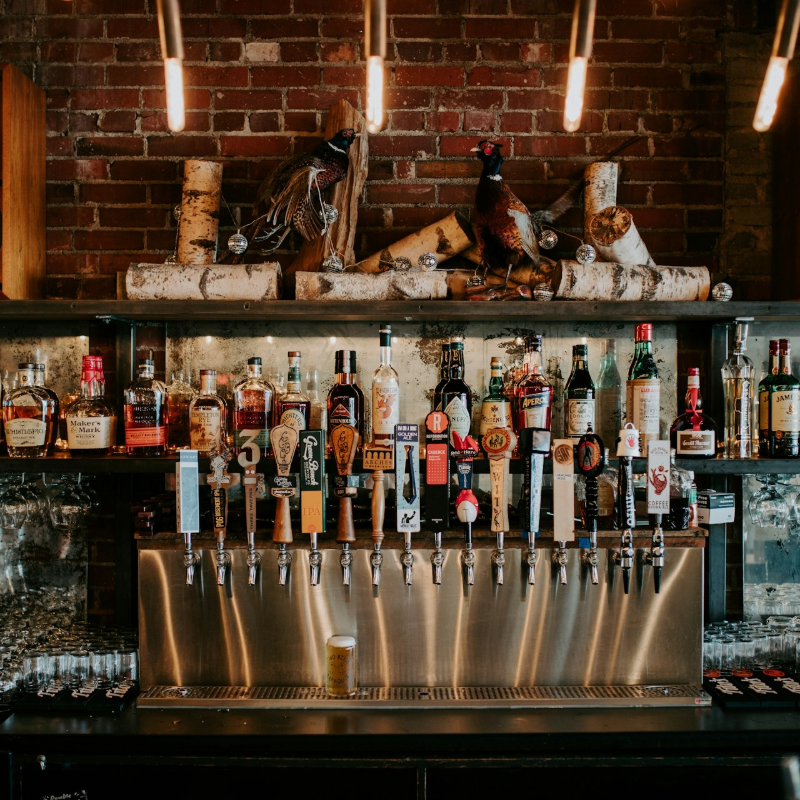

Ireland is primarily known for its lush countryside and rich cultural heritage.
Across the globe, the island is known for its music, race horses, and perhaps most important of all, its pubs.
Irish pubs are deeply embedded in Ireland’s culture. These places aren’t just establishments where drinks are served but are also considered a haven for the communities they are situated in. Ireland also happens to house some of the oldest pubs in the world.
As a result, these pubs have become synonymous with Irish culture and have even earned worldwide renown!
Unfortunately, not every Irish pub could afford to keep operating, especially in the wake of the COVID-19 pandemic, which negatively impacted the global tourism industry.
With costs and inflation up, a number of Irish pubs—even some of the oldest—have been forced to close down.
Heineken, a global brewing company, couldn’t stand idly by and see this happen. That’s why it set out to protect and preserve these iconic pubs from closing down in 2024!
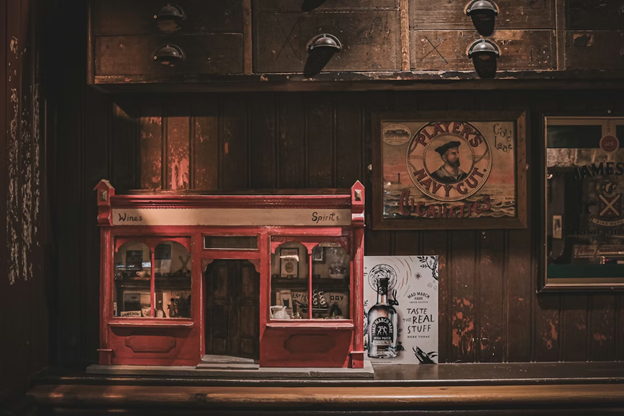
Photo from Unsplash
The Irish Heritage Council provides financial support to places of historical significance like museums. However, pubs don’t exactly fit that classification.
That’s why Heineken and its creative partner LePub (a subsidiary of the Publicis Groupe) came up with a way to give these pubs access to funding.
How?
By turning them into virtual museums!
Pubs across Ireland were converted into digital museums through the use of augmented reality (AR) technology. Some of these pubs had decades of history, making them ripe for such an initiative.
To make the conversion possible, every nook and cranny of a pub was scanned from fixtures down to objects found inside them.
Then, the information gathered was used to create an AR-navigable virtual museum that provided users with information not only about the pub but also everything inside it.
Doing all this essentially enabled anyone to learn about the stories of Ireland’s historic pubs like Toners Pub in Dublin, Mother Macs Public House in Limerick, and Sean’s Bar in Athlone.
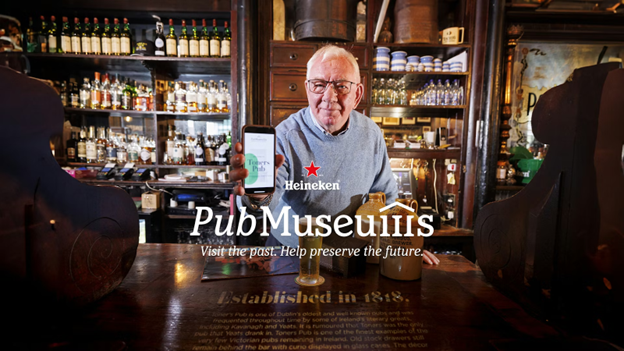
Image from Creative Review
To access these AR museums, all a tourist has to do is scan a QR code located on a plaque outside the featured pubs. Once scanned, an AR overlay is activated and visitors are able to listen to stories about the pubs and see the stories behind every artifact inside them.
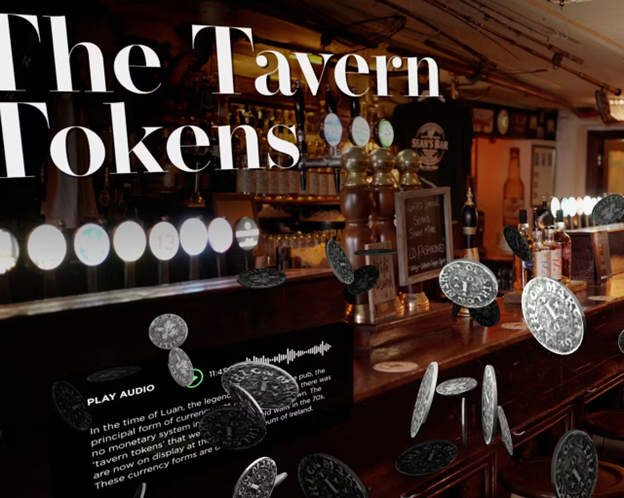
Image from The Drum
What’s more?
Heineken gave other pub owners the opportunity to turn their pubs into virtual museums as well.
Since this initiative turned participating pubs into actual museums, these establishments became eligible for financial support from public institutions.
Even though the campaign has already ended, it was able to help lots of Irish pubs.
Heineken not only helped in creating digital museums but it also supported participating pubs in applying for protected status, resulting in over EUR 230,000 in grants for these establishments.
A 20% tax cut on building maintenance was also given to participating pubs.
Aside from grants, the campaign generated a 30% increase in foot traffic for the digital museums. Over 134 hours of audioguides were also heard and more than 70 Irish media publications featured the campaign.
On top of these impressive results, the campaign gained attention from prestigious awards-giving bodies like The One Club and The Drum.
Kudos to Heineken and Lepub Milan!
—
The success of this campaign shows just how effective guerrilla marketing can be, especially when it is used to promote, preserve, and protect cultural identity.
Last but not least, this campaign showed how powerful tech-forward solutions can be when combined with a dash of out-of-the-box thinking.
About The Dynamic Marketing Communiqué’s
“Fridays: Gorillas of Guerrilla Marketing”
Jay Conrad Levinson (1984) said that Guerrilla Marketing “works because it’s simple to appreciate, easy to execute, and inexpensive.”
Guerrilla Marketing is unconventional.
Looking beyond the traditional ways of advertising, marketers and advertisers need to spice things up in order for their brand to have campaigns that not only make an impact but also stick to their target market’s mind.
Guerrilla Marketing usually aims to have direct contact with consumers.
This type of direct contact should spark an emotional reaction that leads to consumers effectively remembering the brand.
It’s about making a big impression and making that impression last a long time (if not forever).
Guerrilla Marketing can be inexpensive.
The effect of this is being able to create a buzz around the brand, and the strategy used to market it. Almost everything is passed around through word-of-mouth.
Word-of-mouth is one of the greatest outcomes and it usually doesn’t cost anything.
This is every business’ or brand’s dream!
Every Friday, we publish tips, examples, and other useful content on unconventional ways of marketing and promotion.
Learn more about how to grab your target market’s attention and make an amazing first and lasting impression without having to spend a lot of money.
Businesses don’t really need to spend much for a guerrilla campaign. You do not need a big budget to be successful. You just need creativity and a good imagination.
Hope you find this week’s guerrilla marketing insight interesting and helpful.
Stay tuned for next Friday’s “Gorillas of Guerrilla Marketing!”
Cheers,
Dyane Diasanta
Senior Content Writer
Valens Dynamic Marketing Capabilities
Powered by VX Dynamic
www.vxdynamic.com
