
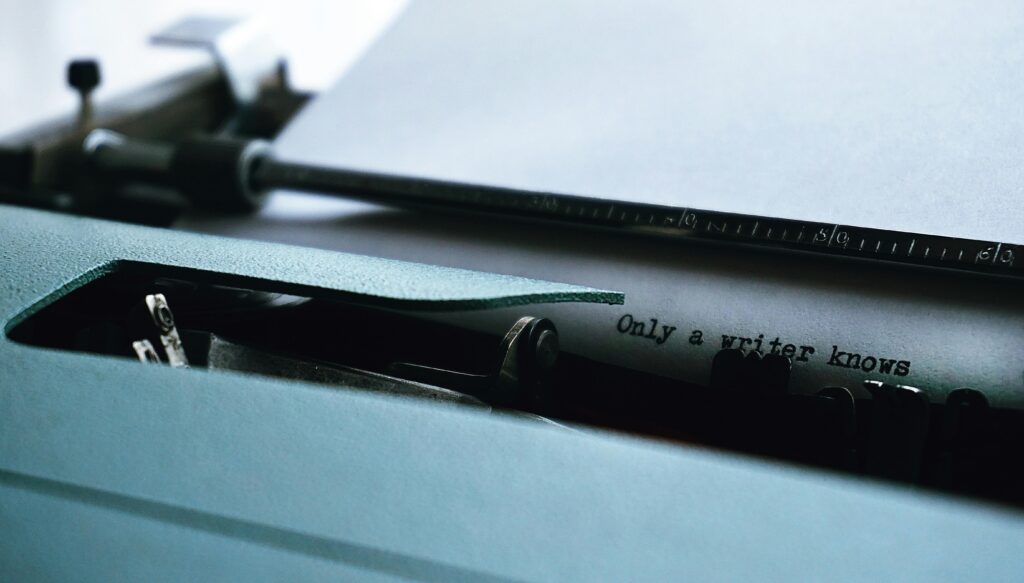

There are sentences that simply inform, and then there are sentences that linger—phrases that stay lodged in the reader’s mind long after the page has turned.
They hum like a tune you can’t forget, not because of what they say, but because of how they say it.
Their rhythm feels effortless, their structure natural, and their meaning inevitable.
Yet, behind that seamless grace lies an intricate architecture—one that few can explain as masterfully as Joseph Bizup and Joseph M. Williams in their celebrated work, “Style: Lessons in Clarity and Grace.”
For Bizup and Williams, elegant writing is not merely about clarity or conciseness, though those are its sturdy bones.
True elegance, they argue, is the life within the structure—the balance, rhythm, and harmony that give prose its music.
Basically, it’s what transforms good writing into unforgettable expressions.
When Clarity Isn’t Enough
Most writers are taught to chase clarity like it’s the holy grail of good prose.
To an extent, that’s true.
A clear sentence is easier to read, a concise one easier to remember.
However, Bizup and Williams also remind us that clarity without charm can feel like eating plain oatmeal—nourishing but dull.
In their words:
“Relentless simplicity has the spartan virtue of unsalted meat and potatoes.”
It’s functional, but forgettable. By contrast, elegance gives readers that flicker of pleasure, the spark that makes a sentence not just understood but also felt.
Yet, as Bizup and Williams admit, elegance cannot be reduced to a formula.
One cannot simply memorize a set of rules and emerge writing like Virginia Woolf or James Baldwin.
Knowing the “ingredients” doesn’t make you a chef; it merely gives you a kitchen to practice in. In the same way, elegance is a gift… but even gifts must be trained and exercised.
Among the many tools of elegant writing, balance and symmetry stand tallest.
The duo describes how skilled writers achieve grace through echoes of sound, rhythm, structure, and meaning. Their sentences become more than conveyors of thought; they become architectural wonders.
The key, Bizup and Williams note, lies in how each element “echoes another in word order, sound, and meaning.”
Readers may not consciously detect this mirroring, but they feel it. The sentence breathes evenly, its ideas balanced like scales in perfect alignment.
Even the shortest phrases can achieve this symmetry!
Words such as give and take, affect and dominate, habit and necessity—each creates a rhythm of balance that shapes not only the writing but also the writer’s thinking.
Elegant structure, then, doesn’t just express ideas but also generates them.
Here’s additional good news!
The beauty of balance isn’t confined to grammatical coordination. Writers can balance ideas, sounds, or lengths even when structures differ.
Bizup and Williams observe that sentences often sound more musical when each successive phrase grows slightly longer than the last. This rhythmic expansion leads the reader forward, building anticipation and momentum.
For instance:
Writing “In his earliest years, Picasso was a master draftsman of the traditional human form” is fine—but add “not only… but also…” and the mind instantly anticipates more.
The sentence creates curiosity; it compels the writer to think deeper, expand, and complete the balance.
In this way, structure becomes thought’s scaffolding—form shaping content in real time.
Used judiciously, these patterns add poise and grace. Used excessively, they risk sounding contrived.
The secret lies in restraint.
As Bizup and Williams put it, elegant coordination should feel like the natural rhythm of reasoning, not the mechanical ticking of rhetorical gears.
What’s more?
If the beginning of a sentence determines its clarity, its ending determines its power.
To Bizup and Williams, the end of a sentence is sacred ground —the place where rhythm and grace meet.
The final words are the echo that lingers in a reader’s mind.
Bizup and Williams outline several techniques for writing climactic endings:
-
End on strong words. Nouns and verbs carry more weight than prepositions or adverbs. A sentence should not fizzle out but land with authority.
Compare “… willing to give support to” with the cleaner, more forceful “… willing to support.” The difference, though small, is decisive.
-
Use “of + weighty word.” This structure, seen often in Churchill’s speeches or Gibbon’s “History of the Decline and Fall of the Roman Empire,” adds rhythm and grandeur.
It’s what gives phrases like “the light of the old” their satisfying finality.
-
Echoing salience. When the end of a sentence mirrors the beginning—through sound, sense, or structure—it creates resonance.
Peter Gay’s “style shapes, and in turn is shaped by, substance” demonstrates this beautifully.
-
Chiasmus. Derived from the Greek word for “crossing,” this structure reverses the order for emphasis (“Ask not what your country can do for you—ask what you can do for your country”).
It’s symmetry with purpose, elegance with logic!
-
Suspension. Sometimes, grace comes from delay. Writers like James Fallows build long, suspenseful openings—strings of “if” clauses, for instance—before releasing the sentence into its final, climactic payoff.
Here, the delayed gratification heightens impact.
Simply said, an elegant sentence doesn’t merely end—it culminates.
The Subtle Magic of Elegance
Bizup and Williams do not romanticize elegance as some mystical gift bestowed only upon literary geniuses.
Instead, they portray it as a discipline—a matter of patience, practice, and awareness.
Besides, the most elegant sentences often hide their scaffolding; readers sense the beauty but not the labor behind it.
In the end, elegance is not about ornamentation. It is about proportion, rhythm, and balance—the subtle interplay of form and feeling that turns mere words into art.
As Bizup and Williams remind us, writing with elegance is not just about impressing readers; it’s also about giving them something they’ll remember.
… because in the architecture of language, clarity builds the house—but elegance makes it a home.
About The Dynamic Marketing Communiqué’s
“Wednesdays: Write with the Pen of the Masters”
Who doesn’t find content writing to be a skill that requires a lot of practice and effort?
In fact, many people may even find copywriting very intimidating.
However, you can be a good writer as long as you have the right tools. You won’t always get things right the first time, but with enough time and practice, you’ll get the hang of it!
When you write copy for any brand or for your company, your aim is to make an impact and…
… to get people to remember.
Getting people to remember means getting consumers to buy your product or avail of your service.
… and when you get your content to deliver the results you want, THAT is great copy!
Every Wednesday, we publish content based on tips and insights from the masters of content writing, copywriting, and storytelling.
Become more familiar with ways to write great copy that helps you gain ROI from your efforts, drive profitability, and achieve your business goals.
Learn time-tested tactics that better capture the attention of your target audience, and maximize the benefits of great copywriting.
Hope you find this week’s insights interesting and helpful.
Stay tuned for next Wednesday’s “Write with the Pen of the Masters!”
Cheers,
Dyane Diasanta
Senior Content Writer
Valens Dynamic Marketing Capabilities
Powered by VX Dynamic
www.vxdynamic.com
