
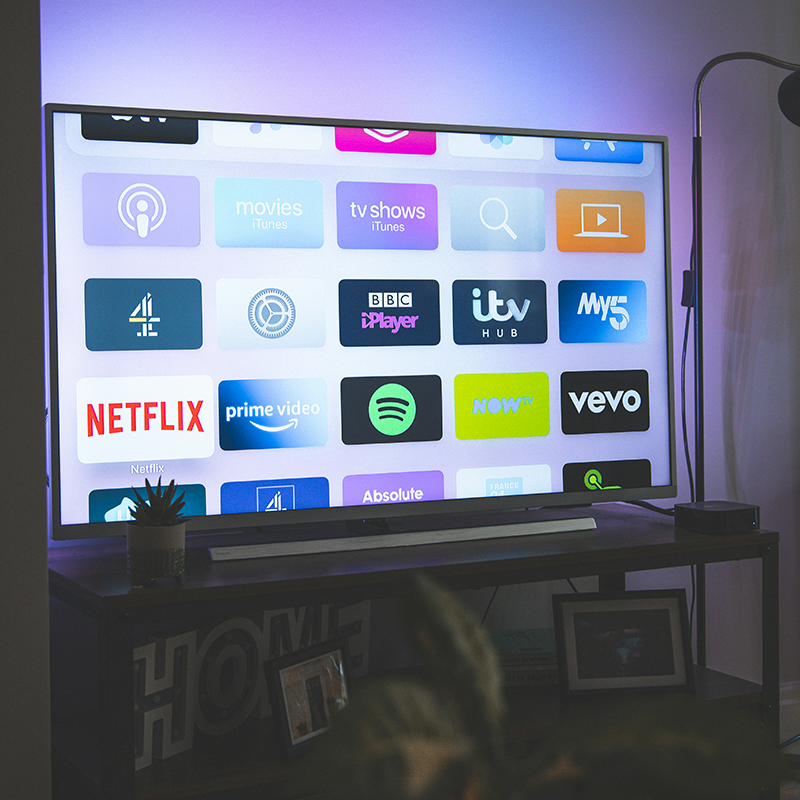

On-demand video streaming saw a massive uptick in demand during the COVID-19 pandemic, as everyone was forced to stay indoors with not much else to do.
During this period of rapid growth, companies saw an opportunity to rake in massive profits due to surging demand, leading giants like Amazon, Disney, HBO, and Apple to invest billions of dollars in marketing, infrastructure, and content creation.
All of this effort was made to catch up to Netflix and get a much bigger slice of the streaming pie.
While the approach made sense in theory, things would turn out differently in the real world.
Building A Competitive Streaming Service Isn’t as Simple as It Looks
Once the lockdown restrictions eased and the pandemic ended, consumers gave up on binge-watching their favorite shows as they finally stepped outdoors after spending years cooped up in their homes.
The result?
Companies that spent billions on their streaming infrastructure are operating in a saturated market where service providers are competing for subscribers who aren’t keen on paying for multiple subscriptions.
Consumers aren’t just wary of subscriptions due to changing consumption trends, but also because of prevailing economic conditions.
For the past few years, U.S. households have been impacted negatively by inflation, leading to tightened spending and declining savings.
As of February 2025, the personal savings rate in the U.S. stands at 4.6%, an improvement from the 3.5% for December 2024 but still lower than the long-term average of 8.4%.
Yet, despite these adverse conditions affecting the streaming industry at large, Netflix continues to dominate and hasn’t slowed down in the face of stiff competition.
Photo from Unsplash
Why?
It’s because competing against Netflix is just too costly.
Let’s take Warner Bros. Discovery (WBD) as an example.
Formed in 2022 as a result of a merger, the company boasts a huge portfolio of content and brands such as the Discovery Channel, CNN, Food Network, Cartoon Network, the Harry Potter franchise, and DC Comics.
Given this plethora of intellectual properties (IPs), Max (formerly known as HBO Max), was seen as WBD’s answer to Netflix.
However, WBD just can’t compete toe-to-toe with its chief competitor. Not only is it bogged down with long-term debt, but it also doesn’t have the reach and adoption that Netflix does.
It’s even gotten to the point where WBD has had to license some of its content back into the Netflix content ecosystem.
Disney+, another competing service, has resorted to this tactic as well as some of its IPs under the Marvel and Star Wars brands.
Licensing content to Netflix provides companies with immediate cash flow, which is much easier than spending on marketing and investing heavily on content creation to draw in paying subscribers.
While exclusivity is a means to attract and retain subscribers, Netflix is just too big and dominant for that to be an option for players like WBD and Disney.
Simply said, Netflix is just too big to go toe-to-toe with.
Netflix’s Dominance Through the Lens of RDS
Viewed through RDS’ second tenet—fulfill otherwise unmet needs—it’s not shocking to see Netflix’s dominance in streaming.
As Professor Joel Litman and Dr. Mark L. Frigo emphasized in the book, “Driven,” high-performance firms provide offerings that are greatly needed and have no substitute to.
From this, pricing power is achieved, leading to high returns.
Netflix is a clear example of this as it has built a robust business that’s able to bring in earnings despite high inflation and murky economic conditions.
It’s able to sustain its dominance because it continuously leverages the data it gets from its customers to find out which genres, content, and talents its target audience would be interested in.
By having access to this information, Netflix is able to churn out content that its subscriber base is enthusiastic about.
… and despite raising subscription prices, the streaming giant continues to enjoy massive viewership and subscription rates because it is a platform that’s able to cover the entertainment needs of its subscribers, be it blockbuster films, high-end TV shows, reality programs, and sports.
The bottom line?
A company that’s able to provide an offering that’s highly sought after yet has no substitute to will be able to dominate its industry regardless of competition or economic headwinds.
—
If you’re looking to gain a better understanding of Return Driven Strategy and Career Driven Strategy, we highly recommend checking out “Driven” by Professor Litman and Dr. Frigo.
Click here to get your copy and learn how this framework can help you in your business strategies and ultimately, in ethically maximizing wealth for your firm.
About The Dynamic Marketing Communiqué’s
“Tuesdays: Return Driven Strategy”
In the book, “Driven,” authors Professor Joel Litman and Dr. Mark L. Frigo said that the goal of every long-term successful business strategy should incorporate the combined necessity of “making the world a better place” and “getting wealthy.”
That is why they created Return Driven Strategy and Career Driven Strategy―frameworks that were built to help leaders and professionals plan and evaluate businesses so they can also help others achieve their organizational goals and career goals.
The frameworks describe the plans and actions that drive returns for anyone in an organization such as independent contractors, marketers, brand managers, communicators, and other people in any field. These actions lead to the creation of wealth and value for customers, employees, shareholders, and the society.
Every Tuesday, we’ll highlight case studies, business strategies, tips, and insights related to Return Driven Strategy and Career Driven Strategy.
In planning, building, or managing brands and businesses, these strategies, case studies, and guidelines will help you choose what specific actions to take and when to take them.
Hope you find this week’s topic interesting and helpful.
Stay tuned for next Tuesday’s “Return Driven Strategy!”
Cheers,
Adrian Kyle Vergara
Content Writer
Valens Dynamic Marketing Capabilities
Powered by VX Dynamic
www.vxdynamic.com
