


Success in Hollywood isn’t just about talent—it’s also about timing, adaptability, and knowing how to connect with an audience.
The same is true for business.
In an industry where public perception is everything, some stars fade into the background, while others redefine their careers with savvy decisions that extend beyond the silver screen.
One such name that has seamlessly blended authenticity with strategic branding is Tom Holland.
From web-slinging in billion-dollar blockbusters to launching a brand that’s shaking up an entire industry, Holland’s journey is not just a celebrity venture but also a masterclass in marketing and business positioning.

Photo from Biography
More Than Just Spider-Man
Born in 1996 in Kingston upon Thames, England, Holland’s career started humbly with his breakout role in “Billy Elliot the Musical” on London’s West End.
However, his true rise to fame came when he landed the role of Peter Parker or Spider-Man in the Marvel Cinematic Universe (MCU), catapulting him into global stardom with “Spider-Man: Homecoming” (2017) and subsequent MCU films.
What sets Holland apart from other actors isn’t just his acting chops but also his relatability.
Unlike many Hollywood elites, he remains grounded, engaging directly with his audience through social media, candid interviews, and an approachable personality.
He’s the guy-next-door who just happens to be a superhero, and that genuine connection is the cornerstone of his marketing power.
The Birth of Bero
In 2024, Holland made an unexpected yet calculated business move by launching Bero, a nonalcoholic beer brand.
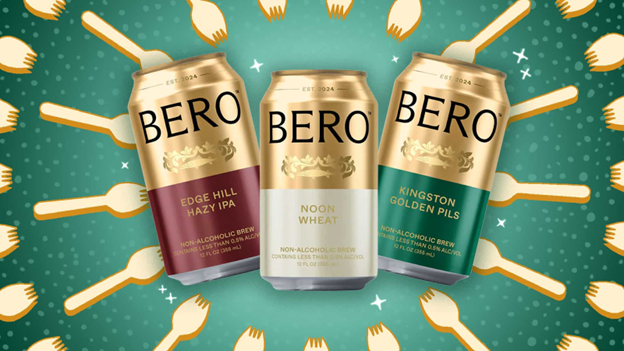
Photo from Sporked
Unlike many celebrity-endorsed brands that feel like cash grabs, Bero was deeply personal for him.
The idea stemmed from Holland’s own experience with sobriety, which began as a challenge and evolved into a lifestyle choice after realizing its positive impact on his life.
… but wait, there’s more!
Instead of merely slapping his name on a product, Holland and his team developed Bero with intentionality.
The brand launched with three brews:
- Kingston Golden Pils – A pilsner with notes of biscuit and bread, offering moderate bitterness.
- Edge Hill Hazy IPA – An India Pale Ale (IPA) featuring dank and tropical notes.
- Noon Wheat – A wheat beer finishing with a citrus kick.
… all of which are crafted to maintain the depth and complexity of traditional beers without the alcohol.
Then, partnering with industry veteran Grant Wood, Holland ensured Bero was not just a gimmick but a quality-driven product that could stand on its own in the competitive non-alcoholic beverage market.
The Secrets Behind Holland’s Brand Strategy
Holland’s approach to business and branding offers key takeaways for entrepreneurs and marketers alike.
Here’s what makes him a true “Marketing Marvel”:
-
Authenticity Wins Every Time
-
Community Engagement Over Traditional Advertising
-
Leveraging Personal Brand for Business Success
-
Filling a Gap in the Market
Holland’s decision to launch Bero was not based on market trends alone—it was a direct extension of his personal journey.
This level of authenticity resonates with consumers who crave brands that feel real AND trustworthy.
The lesson?
Successful brands are built on genuine stories, not just flashy advertising!
Instead of relying solely on traditional marketing, Holland used his MASSIVE social media presence and existing fanbase to build anticipation around Bero.
After all, his audience feels connected to him, making them more likely to trust and support his ventures.
Businesses can learn from this: Engage directly with your audience rather than speaking at them.
Holland has spent years cultivating a personal brand that is fun, relatable, and down-to-earth. This credibility transferred seamlessly to Bero, proving that a strong personal brand can be a powerful launchpad for new ventures.
For business owners, leaders, and marketers, the takeaway here is clear: Invest in personal branding, because people buy from people, not just companies.
The rise of the nonalcoholic beverage industry has been undeniable, but Holland identified a gap—premium, thoughtfully crafted non-alcoholic beer with a mainstream appeal.
By launching Bero, he entered a growing industry with a product that stood out, rather than competing in a saturated market.
This shows that businesses should always look for gaps rather than simply follow crowded trends.
Clearly, Holland’s business playbook is a reminder that great marketing is not just about selling but also about storytelling.
Here are three key lessons you can take away from his approach:
- Build from your personal truth: The most successful brands feel like an extension of the people behind them. Find what genuinely resonates with you and make that your brand’s foundation.
- Use your audience as your biggest asset: Whether you have 100 followers or a million, audience trust is invaluable. Engage, listen, and involve them in your brand’s journey.
- Don’t be afraid to take risks: Holland could have followed the typical celebrity playbook—launching a perfume or clothing line—but instead, he took a bold leap into a rising industry. Identifying unique opportunities sets apart successful entrepreneurs from the rest.
—
Holland’s transition from actor to entrepreneur is proof that celebrity brands can be more than just trendy—they can be meaningful, impactful, and successful.
By blending authenticity with strategic marketing, he has positioned Bero as a serious player in the nonalcoholic beverage industry while reinforcing his reputation as a brand powerhouse.
For marketers and business owners, the takeaway is simple:
The best brands aren’t built—they’re lived.
… and in a world where consumers crave authenticity more than ever, Holland’s Bero is not just a beverage but also a blueprint for success.
About The Dynamic Marketing Communiqué’s
“Mondays: Marketing Marvels”
Too often, industry experts and the marketing press sing the praises of some brand or company’s marketing strategy.
… only for the audience to later find out that its product was a flop, or worse, that the brand or company went bankrupt.
The true ROI in marketing can’t be separated from the business as a whole.
What good is a marketing case study if one can’t prove that the company’s efforts actually paid off?
At the end of the day, either the entire business is successful or it isn’t. And the roles of marketing and communication are always paramount to that success.
Every Monday, we publish a case study that highlights the world’s greatest marketing strategies, marketers, and communicators.
However, the difference between our articles and the numerous ones out there is that we will always make certain that the firm really did generate and demonstrate earning power worthy of study in the first place in keeping with a person’s leadership skills in the area of marketing and/or communication.
We’ll also study the greatest marketing fails and analyze what they did wrong, or what they needed to improve. We all make mistakes, but better we learn from others’ mistakes—and earlier, rather than later.
Hope you find this week’s topic interesting and helpful.
Stay tuned for next Monday’s “Marketing Marvels!”
Cheers,
Adrian Kyle Vergara
Content Writer
Valens Dynamic Marketing Capabilities
Powered by VX Dynamic
www.vxdynamic.com
