


Imagine walking into a world designed purely for joy—bright lights, laughter echoing off walls, and every corner crafted to spark delight…
Now, imagine trying to bottle that magic and deliver it online.
For most, it would seem impossible… but for Funlab, Australia’s leader in entertainment and leisure, it became the ultimate challenge: How to translate an immersive, in-person experience into a seamless, engaging digital journey that not only delighted customers but also drove measurable business results.
Just a bit of a context…
During the COVID-19 pandemic, Funlab noticed a shift. Its audiences weren’t just visiting in person; they were increasingly engaging online.
Digital channels suddenly became central to people’s lives, revealing untapped potential.
So, how could a company built on physical experiences capture the same sense of excitement online while optimizing for conversion and growth?
The answer came in the form of a bold, data-driven collaboration with Merkle Australia, a global leader in customer experience management.
Bridging Physical Fun and Digital Efficiency
Funlab’s objectives were clear yet ambitious. It needed to:
- Recreate the Experience – Deliver the same engaging, frictionless journey online that customers loved in the brand’s physical venues.
- Optimize Every Opportunity – Ensure no interaction went unconverted, maximizing value at every digital touchpoint.
- Leverage Data Fully – Achieve a complete 360-degree view of guests to inform smarter decisions and more personalized marketing.
The stakes were high. Besides, rebuilding the online sales funnel demanded both creative thinking and technical precision, merging immersive digital experiences with actionable insights.
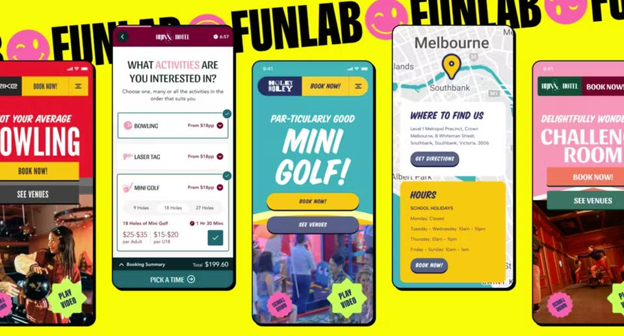
Photo from Dentsu
So, Funlab and Merkle approached the challenge with a holistic strategy!
- Developing a Flexible CMS: At the core of the transformation was a modular content management system, allowing Funlab to manage multiple brand sites efficiently. The CMS’s flexibility meant the company could scale operations while maintaining brand consistency across different digital properties.
- Optimizing the Booking Flow: The partnership also honed the booking process. By analyzing customer behaviors and pain points, Funlab and Merkle streamlined the journey, making it intuitive, fast, and tailored to user expectations—essential for converting clicks into visits.
- Integrating Salesforce for Unified Insights: A fragmented data landscape made it difficult to fully understand customer behavior. By integrating Salesforce into the digital ecosystem, Funlab connected previously siloed information, achieving a comprehensive view of each guest. This 360-degree perspective enabled precise marketing efforts, driving personalization at scale.
Beyond technical improvements, the collaboration spurred new offerings.
Funlab introduced the Fun Pass, a subscription-based product granting exclusive access to attractions and events.
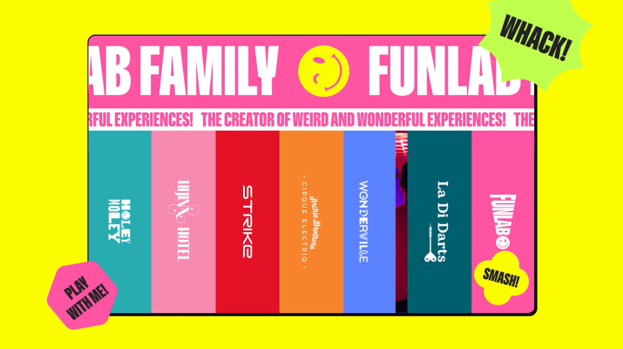
Photo from Merkle
This not only increased customer loyalty but also boosted lifetime value by encouraging repeat visits, merging fun with functional business growth!
FUN, right?
Data-Driven Fun in Action
The impact of Funlab’s digital transformation was striking:
- 100% Increase in Online Visits – The enhanced digital journey successfully attracted more visitors to Funlab’s online platforms.
- 200% Growth in Digital Revenue – Optimized booking flows and personalized marketing efforts drove a substantial increase in online sales.
- 69% Increase in Conversion Rate – Improvements in usability and data-driven targeting turned more visitors into paying customers.
- 100+ Shared Design Components Across 8 Brands – A modular approach ensured brand cohesion while supporting scale and flexibility.
These results reflect more than just numbers. More importantly, they underscore the power of combining creativity, data, and technology to reinvent how a brand engages with its audience.
Awesome, right?
Kudos to doing a really great job, Funlab and Merkle!
*Claps*
Clearly, Funlab’s journey proves that even the most entertainment-driven brands can achieve serious results when creativity, data, and technology intersect.
By merging physical and digital experiences, Funlab not only navigated pandemic-driven challenges but also created a scalable foundation for sustainable growth.
For other brands and marketers, several key lessons emerge here:
- Prioritize the Customer Experience Across Channels – Whether online or offline, every touchpoint should reflect your brand’s essence. Funlab’s digital journey mirrored the excitement of its physical venues, showing the power of consistency in engagement.
- Leverage Data to Drive Decisions – Understanding your customers holistically allows for personalization, optimization, and smarter resource allocation. Integrating disparate data sources, as Funlab did with Salesforce, ensures no insight goes untapped.
- Test, Optimize, and Repeat – Streamlining processes like the booking flow highlights the importance of iterative improvement. Even small UX optimizations can significantly boost conversions and revenue.
- Innovate with Products and Offerings – Digital transformation isn’t just about systems but also about value creation. The Fun Pass demonstrates how new, customer-centric products can drive loyalty and increase lifetime value.
- Build Scalable Systems for the Future – Modular CMS design and shared digital components enable brands to grow without losing efficiency or cohesion, ensuring campaigns remain agile and adaptable.
Last but definitely not the least…
Funlab’s success underscores that blending imagination with data-driven strategies isn’t just for entertainment brands.
Any marketer looking to deepen engagement, boost conversions, and future-proof their campaigns can take a page from Funlab’s playbook.
It’s simple, to be honest!
All you need to do is know your audience, streamline experiences, and innovate relentlessly.
About The Dynamic Marketing Communiqué’s
“Fridays: Gorillas of Guerrilla Marketing”
Jay Conrad Levinson (1984) said that Guerrilla Marketing “works because it’s simple to appreciate, easy to execute, and inexpensive.”
Guerrilla Marketing is unconventional.
Looking beyond the traditional ways of advertising, marketers and advertisers need to spice things up in order for their brand to have campaigns that not only make an impact but also stick to their target market’s mind.
Guerrilla Marketing usually aims to have direct contact with consumers.
This type of direct contact should spark an emotional reaction that leads to consumers effectively remembering the brand.
It’s about making a big impression and making that impression last a long time (if not forever).
Guerrilla Marketing can be inexpensive.
The effect of this is being able to create a buzz around the brand, and the strategy used to market it. Almost everything is passed around through word-of-mouth.
Word-of-mouth is one of the greatest outcomes and it usually doesn’t cost anything.
This is every business’ or brand’s dream!
Every Friday, we publish tips, examples, and other useful content on unconventional ways of marketing and promotion.
Learn more about how to grab your target market’s attention and make an amazing first and lasting impression without having to spend a lot of money.
Businesses don’t really need to spend much for a guerrilla campaign. You do not need a big budget to be successful. You just need creativity and a good imagination.
Hope you find this week’s guerrilla marketing insight interesting and helpful.
Stay tuned for next Friday’s “Gorillas of Guerrilla Marketing!”
Cheers,
Dyane Diasanta
Senior Content Writer
Valens Dynamic Marketing Capabilities
Powered by VX Dynamic
www.vxdynamic.com
