

Since its founding in 1991, Epic Games, a.k.a. Epic, has slowly but surely climbed its way to the top of the gaming industry and has become a billion-dollar company.
While commonly associated with “Fortnite,” a highly successful multiplayer video game, there’s more to Epic’s story than meets the eye.
To understand what made Epic a billion-dollar juggernaut in the gaming industry, we need to take a close look at the company’s history.
A Company Deeply Embedded in Gaming
Founded by Timothy “Tim” Dean Sweeney in 1991, Epic initially began as a consulting business named Potomac Computer Systems. When this venture didn’t pan out, Sweeney decided to try out game development instead, since he was a fan of video games.
In 1991, Sweeney released “ZZT,” an action-adventure puzzle game launched and published under the name of his first company. The title became popular among players because it allowed them to create custom content for the game.
Following the success of “ZZT,” Sweeney, in partnership with Digital Extremes, developed and released a first-person shooter titled, “Unreal.”
While “Unreal” would go on to become a full-fledged game series, Unreal Engine—the game engine that powered the title—would become one of Epic’s most valuable genuine assets.
Unreal Engine is a powerful 3D computer graphics game engine used in video game development. It wasn’t just used in PC games but also for titles that were exclusively developed for gaming consoles like the PlayStation and Xbox.
Upon the release of “Unreal,” Epic licensed the Unreal Engine to various game developers, making it one of the company’s business pillars as earnings from licensing deals were used for research and development (R&D) and other projects.
Another positive development that resulted from Epic’s creation and licensing of the game engine was it enabled the company to establish itself as a reputable and reliable name in the gaming industry.

Photo from Unsplash
Then, after successfully developing and licensing its proprietary game engine, Epic went on to develop its “Gears of War” franchise, intellectual property (IP) that saw critical and financial success.
Eventually, the “Gears of War” IP was sold to Microsoft in 2014.
Becoming An Industry Titan
After selling the “Gears of War” franchise in 2014, Epic pivoted to become a multi-platform developer that specialized in publishing games that made revenues on a recurring basis.
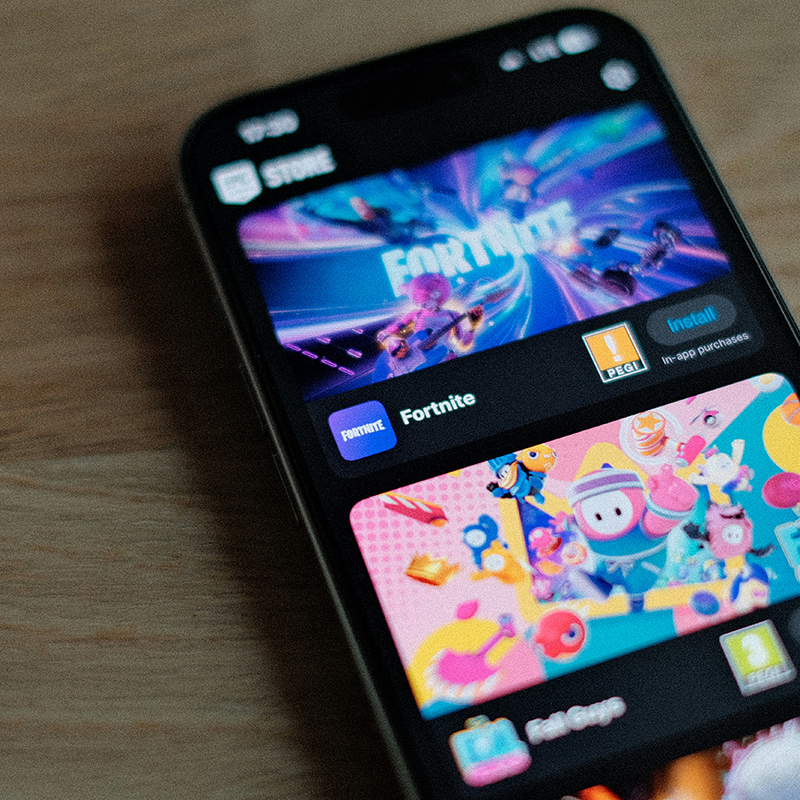
This culminated in the release of “Fortnite” in 2017, a free-to-play multiplayer third-person shooter game that became popular among players aged 10 and above due to its captivating visuals and game mechanics.
Despite being free-to-play, “Fortnite” became a moneymaker for Epic due to its microtransactions mechanic, a feature that allows players to acquire in-game currency—used to purchase in-game objects, outfits, emotes, and other exclusive items—by using real money.
The cost of the game’s in-game currency ranges from USD 8.99 to USD 79.99. As of 2025, “Fortnite” has over 30 million active users on a daily basis. According to the latest available data, it was estimated that the game made over USD 4 billion in 2022.
Given its active player base and the cost of its microtransactions, it’s reasonable to assume that Epic continues to make billions in revenues from the game.
That’s not all, though.
Epic has another moneymaker up its sleeve in the form of Epic Games Store—a digital storefront where PC and mobile users can purchase video games.
Launched in 2018, the Epic Games Store served as another revenue-making pillar for Epic.
To quickly attract developers, Sweeney came up with a generous revenue sharing model with game studios. In that particular setup, Epic takes a 12% commission on game sales, leaving developers to keep the remaining 88% of revenue.
Additionally, Epic doesn’t take a cut of any in-game purchases as long as developers use their own payment system. This scheme made the Epic Games Store a great platform to publish free-to-play games.
Sweeney also attracted gamers by providing free games every week. As of 2025, Epic’s digital storefront has distributed hundreds of games to players across the globe despite incurring millions in costs.
The tactic largely worked as the Epic Games Store has over 295 million users as of 2024.
Epic Games’ Success Through the Lens of RDS
Epic’s success is best explained through RDS’ first foundation—genuine assets.
As Professor Joel Litman and Dr. Mark L. Frigo emphasized in the book, “Driven,” any business activity can be copied by competitors as soon as this generates high returns or has the potential to do so, leading to price competition and lower cash flow returns.
However, by leveraging genuine assets appropriately, a firm can create offerings that no one else can replicate, resulting in higher growth and returns.
Epic is a clear example of a business that has creatively and properly leveraged its genuine assets as it’s established itself as one of the leading figures in the gaming industry despite the presence of competitors.
By creating and leveraging its genuine assets in ways that attract customers and drive profitability, Epic is able to maintain its competitive advantage among its peers.
The bottom line?
A company that can leverage its genuine assets well can and will attain high levels of performance despite operating in a crowded market that’s full of viable competitors and alternatives.
—
If you’re looking to gain a better understanding of Return Driven Strategy and Career Driven Strategy, we highly recommend checking out “Driven” by Professor Litman and Dr. Frigo.
Click here to get your copy and learn how this framework can help you in your business strategies and ultimately, in ethically maximizing wealth for your firm.
About The Dynamic Marketing Communiqué’s
“Tuesdays: Return Driven Strategy”
In the book, “Driven,” authors Professor Joel Litman and Dr. Mark L. Frigo said that the goal of every long-term successful business strategy should incorporate the combined necessity of “making the world a better place” and “getting wealthy.”
That is why they created Return Driven Strategy and Career Driven Strategy―frameworks that were built to help leaders and professionals plan and evaluate businesses so they can also help others achieve their organizational goals and career goals.
The frameworks describe the plans and actions that drive returns for anyone in an organization such as independent contractors, marketers, brand managers, communicators, and other people in any field. These actions lead to the creation of wealth and value for customers, employees, shareholders, and the society.
Every Tuesday, we’ll highlight case studies, business strategies, tips, and insights related to Return Driven Strategy and Career Driven Strategy.
In planning, building, or managing brands and businesses, these strategies, case studies, and guidelines will help you choose what specific actions to take and when to take them.
Hope you find this week’s topic interesting and helpful.
Stay tuned for next Tuesday’s “Return Driven Strategy!”
Cheers,
Adrian Kyle Vergara
Content Writer
Valens Dynamic Marketing Capabilities
Powered by VX Dynamic
www.vxdynamic.com
