
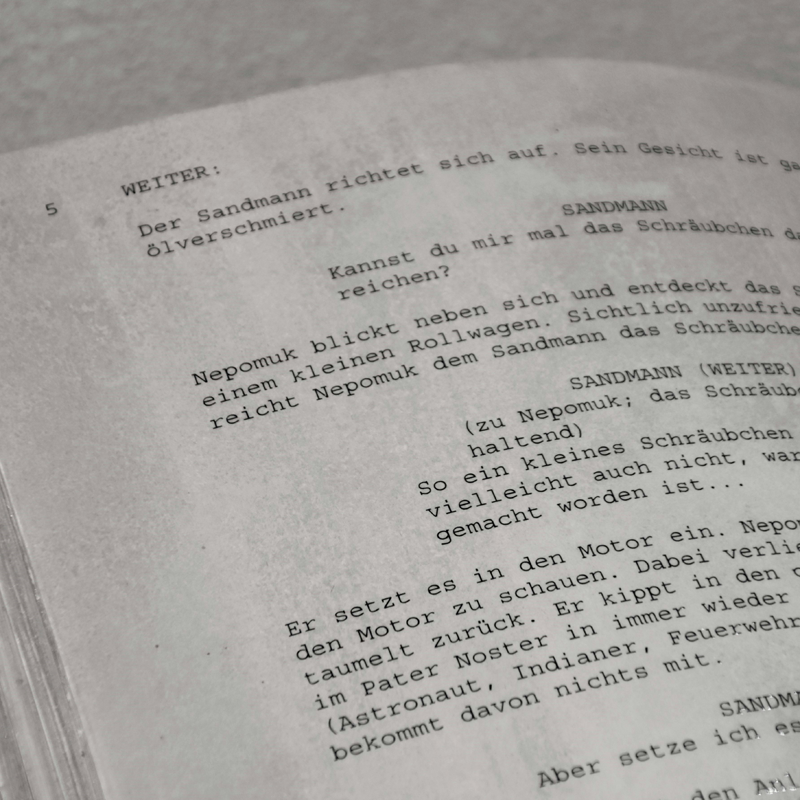

Imagine this: You’ve invested many hours working on your presentation, making sure that every talking point is polished and fully fleshed out.
… and to help you make your talk more organized and cogent, you create a script that you wrote to be easy to remember. As a result, you endeavor to follow it to the letter, committing to not deviate from what you’ve written.
Fast forward to your talk, you climb the podium, confident in yourself and feel secure that you have a well-memorized script to help you through your presentation.
As your talk goes on, you deliver each line perfectly and without deviation from your script.
However, a few more minutes, you end up going off script, failing to remember the exact lines you prepared yourself to say.
Oh no…
Does this mean your talk is ruined?
Definitely not!
Your script isn’t the end-all and be-all of your talk.
In fact, what truly matters is not what you’ve written in that script, but your message!
Focusing On What Truly Matters
Using a script isn’t necessarily a bad thing, as it helps you map out what you plan to say during a presentation.
However, becoming over reliant on your script doesn’t just put you at risk of sounding monotonous but can also be a detriment to your focus, pace, and intensity when you’re unable to follow it.
Delivering the lines on your script is a massive confidence booster… and while this may be the case, it can have the opposite effect when things don’t go according to plan or if you forget the line you were supposed to deliver.
So, as a speaker, what do you do when what you say deviates from your perfectly-crafted script?
Well, the first and most important thing you should keep in mind is a shift in your mindset.
Instead of focusing your efforts on memorizing your script and delivering what’s on it to perfection, focus on the message you want to get across to your listeners.
This way, no matter how your presentation pans out, you’ll always have a guide to fall back on when you do forget a line.
To further hedge against the pitfalls of a memorized script, it’s best to organize your presentation based on key messages and transitions.
This way, you’ll have a clear picture of where you are in your presentation throughout your talk, as it’s often easier to recall key ideas and words when you associate them with a specific phrase or key idea.
Disclaimer: What we’ve said so far isn’t meant to discourage you from preparing a script as part of your presentation.
A script is a powerful tool when it comes to presenting, as it allows you to structure your presentation and achieve precision in delivering your message (especially if you’re talking about a highly specialized topic).
What we’re merely saying is your script is just an aspect of your presentation and it shouldn’t break your talk when you forget or adlib a line or two.
Always remember that as a speaker, what matters most is the message you want to convey to your listeners and as such, you don’t have to pressure yourself that you have to deliver it the way you wrote it in your script, even if letting go of that mindset can be challenging at times.
Mistakes can and will be made, even if you have a script. So as a speaker, always remember that it isn’t always about perfect deliveries; what truly matters is the message you want to convey to your listeners!
About The Dynamic Marketing Communiqué’s
“Thursdays: Speak on the Shoulders of Giants”
In a meeting with one person…
… a boardroom with five people…
… or a huge venue with hundreds of people…
—whatever the situation or setting, it’s very important to learn and eventually master the art of public speaking.
No matter what, you always need to effectively get your message across.
What good is a presentation with awesome content if you don’t deliver it properly?
Every Thursday, we publish different tips, insights, and secrets on how you can improve your presentation skills to captivate your audience and lead interesting discussions.
The need for great presentation skills applies EVERYWHERE.
(Small meetings with your team, big meetings with your boss, an important marketing pitch, speaking engagements for events with a big audience, etc.)
Learning these skills is not just for the corporate world. Being in other industries such as the Arts, Information Technology, Medicine, and Education while knowing how to communicate and present well will definitely give you an edge.
Have that advantage.
Hope you find this week’s public speaking tip interesting and helpful.
Stay tuned for next Thursday’s “Speak on the Shoulders of Giants!”
Cheers,
Henry Desai
Managing Director
Valens Dynamic Marketing Capabilities
Powered by VX Dynamic
www.vxdynamic.com
