
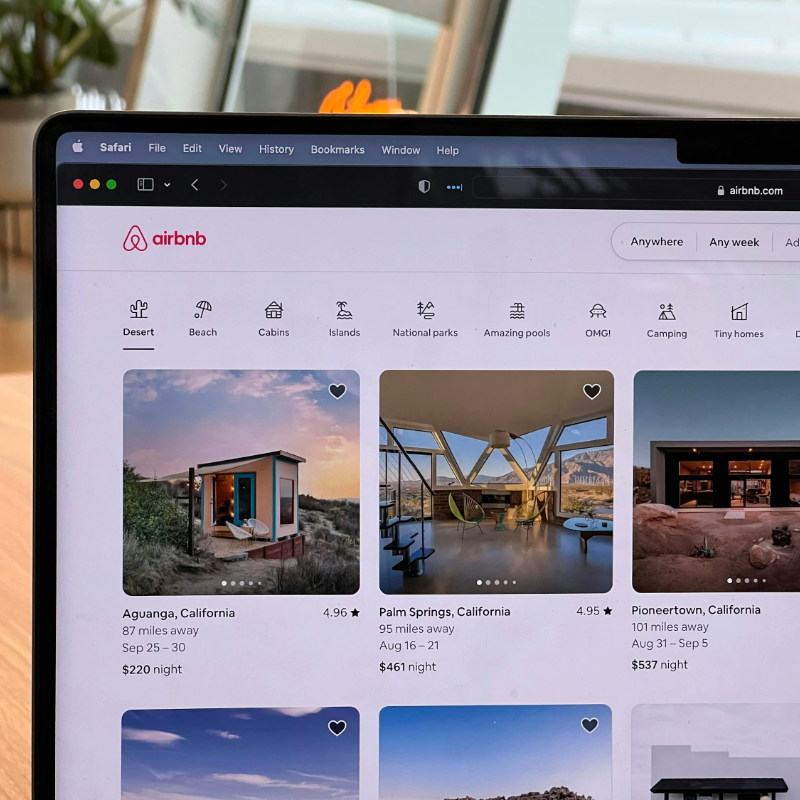

How do you convince someone to book a stay in a stranger’s home?
For Airbnb, that was one of the biggest challenges it had to overcome during its early days.
You see, while booking stays at properties owned by individuals is a common practice today, the same couldn’t be said in 2008, the year Airbnb was founded. Back then, those who went on vacations or business trips booked hotel rooms.
Airbnb was founded based on changing how temporary lodging worked… and since its founding, it has managed to do exactly that and more!
In fact, the company has five million hosts listing their rental properties on its platform and has managed to rack up over 2.5 billion guest arrivals as of 2025.
Airbnb also boasts an annual revenue of over USD 10 billion, alongside a market cap of nearly USD 100 billion.
At the center of this successful business is CEO Brian Chesky, who co-founded the platform alongside Nathan Blecharczyk and Joe Gebbia.
Who is Brian Chesky?
Chesky is the co-founder and CEO of Airbnb. Before becoming an entrepreneur, he studied Industrial Design at the Rhode Island School of Design, where he earned his bachelor’s degree in Fine Arts in 2004.

Photo from Airbnb
In 2008, he co-founded Airbnb with Gebbia and Blecharczyk. What began as a small idea eventually grew into a global platform connecting hosts and travelers across over 220 countries and regions.
On paper, Airbnb’s growth looks like a familiar tech success story. Look closer, though, and Chesky’s approach is anything but typical.
His background in design influenced how he thought about the business, leading him to pay attention not only to the platform itself, but to everything that happened around it.
That way of thinking shaped how Airbnb tackled some of its biggest challenges, from earning trust between strangers to imagining experiences that went far beyond the expected.
Chesky’s design background also shaped how he approached the challenges Airbnb faced.
Rather than relying only on reports or data, he looked for ways to understand the experience from the customer’s perspective.
That became clear in Airbnb’s early days, when Chesky and Gebbia personally visited hosts, photographed their homes, and listened to their feedback.
Seeing the platform from the hosts’ perspective helped them identify issues they might not have noticed from behind a screen.
Chesky later applied the same approach when thinking about how Airbnb could improve the customer experience.
This is best exemplified by Airbnb’s “11-star Experience” framework, an exercise that asks employees to imagine the best possible experience for a customer.
That mindset also influenced the way Airbnb approached the everyday details of its platform, from high-quality listing photos and clear communication to reviews and profiles that help guests feel more comfortable staying in a stranger’s home.
In a nutshell, here’s how Chesky built Airbnb:
- Learn what the customer experiences
- Identify what could be improved
- Find ways in fulfilling unmet customer needs
A Playbook Designed for Success
Chesky’s approach offers a few practical lessons for brands or leaders who seek to provide a customer experience that people trust and remember.
-
Put Customers First
Chesky’s early visits with Airbnb hosts showed the value of getting close to the people who use a brand’s service. Instead of relying only on reports, he saw the experience firsthand and used those observations to identify problems and improve the platform.
-
Create A Trustworthy Environment
Airbnb asks strangers to stay in each other’s homes, making trust central to the service.
Profiles, reviews, communication, and customer support all help reduce uncertainty and make the experience feel safer.
For any brand, trust is stronger when customers can experience it rather than simply being told that a brand or service can be trusted.
Clearly, Chesky’s approach to building Airbnb helped him create a platform that people know, love, and trust.
So, if you’re looking for inspiration in building or elevating your brand, Chesky’s playbook is worth emulating and making use of!
About The Dynamic Marketing Communiqué’s
“Mondays: Marketing Marvels”
Too often, industry experts and the marketing press sing the praises of some brand or company’s marketing strategy.
… only for the audience to later find out that its product was a flop, or worse, that the brand or company went bankrupt.
The true ROI in marketing can’t be separated from the business as a whole.
What good is a marketing case study if one can’t prove that the company’s efforts actually paid off?
At the end of the day, either the entire business is successful or it isn’t. And the roles of marketing and communication are always paramount to that success.
Every Monday, we publish a case study that highlights the world’s greatest marketing strategies, marketers, and communicators.
However, the difference between our articles and the numerous ones out there is that we will always make certain that the firm really did generate and demonstrate earning power worthy of study in the first place in keeping with a person’s leadership skills in the area of marketing and/or communication.
We’ll also study the greatest marketing fails and analyze what they did wrong, or what they needed to improve. We all make mistakes, but better we learn from others’ mistakes—and earlier, rather than later.
Hope you find this week’s topic interesting and helpful.
Stay tuned for next Monday’s “Marketing Marvels!”
Cheers,
Adrian Kyle Vergara
Content Writer
Valens Dynamic Marketing Capabilities
Powered by VX Dynamic
www.vxdynamic.com
