


It started with a wrong coffee order.
You asked for an oat milk latte and got a triple espresso instead.
As the bitterness jolted through you, you realized something else—you’d forgotten your own password for the third time this week, missed your friend’s birthday (again), and walked into a room only to forget why you were there.
Oooh, that sounds familiar…
In an age of limitless information, sometimes you can’t help but feel like your mind is maxed out. You’re juggling calendars, codes, names, and scripts, all while trying to appear like you have it all together.
… but did you know there’s a trick—used by champions, monks, and everyday people alike—that can transform your brain into a stage where nothing gets forgotten?
Yes, this isn’t science fiction—it’s REAL!
It’s called the memory palace, and it’s as accessible as your imagination.
From a Curious Spectator to a Memory Champion
Joshua Foer was neither a neuroscientist, memory expert, nor mentalist. He was simply a regular guy with a not-so-uncommon problem:
He forgot things.
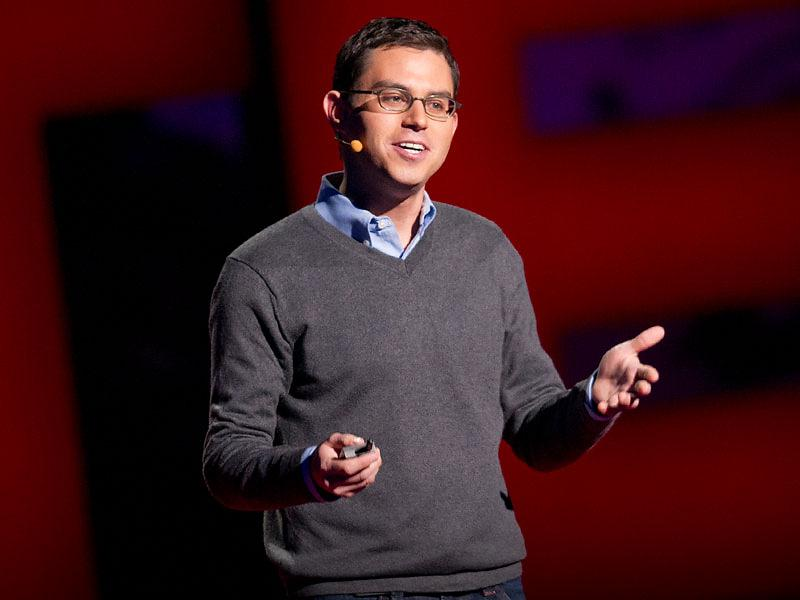
Photo from TED Talks
A science journalist by profession and a curious storyteller by nature, Foer spent his career exploring the quirks of human cognition. His most unexpected discovery came while covering the U.S. Memory Championship in New York City.
Back then, Foer arrived at the venue expecting to observe a gathering of geniuses… but that wasn’t what happened.
Instead, he met people who swore they had average memories. However, what set them apart was something far more intriguing: They had trained themselves using ancient techniques to perform seemingly superhuman mental feats.
Fascinated, Foer didn’t just write about what he saw—he dove into it. Over the course of a year, he practiced the techniques himself, coached by mental athletes and memory experts.
The culmination of his journey?
He returned to the very same competition stage—not as a reporter, but as a surprise contestant—and ultimately won the championship!
Woah. That was simply AWESOME!
Eventually, that journey became the foundation for Foer’s bestselling book, “Moonwalking with Einstein: The Art and Science of Remembering Everything.” The book dives deep into the science, history, and wonder of memory, and this is where he first coined the term, “memory palace.”
So, what is a “memory palace”?
Imagine this: You’re walking through your childhood home. The hallway walls are lined with sneakers instead of picture frames. The kitchen sink is overflowing with playing cards. A giraffe is sitting at the dinner table, reading your to-do list.
Sounds absurd?
That’s exactly the point!
A memory palace is a mental structure—a place you know intimately, such as your home or the path you take to school—that you fill with bizarre, vivid, and emotionally charged images tied to the information you want to remember.
It’s based on the idea that the human brain is hardwired to recall images and spatial relationships far better than random strings of data.
According to Foer, when you transform dull information into wild, unforgettable scenes and “place” them in familiar mental locations, you create a system that your brain loves to navigate.
So, let’s say you’re preparing for a presentation. You want to sound natural, not robotic, yet memorizing pages of notes makes it feel impossible.
Enter the memory palace…
Instead of rehearsing line by line, you visualize your speech as a journey through your palace. Your introduction is represented by a lion roaring at the front door…
Your first main point? A stack of cash in the bathtub.
… and your conclusion? A hot air balloon lifting off from the backyard.
When it’s time to present, all you have to do is walk through your palace in your mind. The images you planted act as breadcrumbs, guiding you from one idea to the next.
You’re not reading. You’re not reciting. You’re simply flowing—because you’ve internalized your content deeply enough to make it second nature.
Here’s the kicker: The more absurd the imagery, the more effective it is. After all, our brains love the weird!
Why This Works
Come to think of it: Our ancestors didn’t have notebooks, iPhones, or Google back in the days. They simply relied on mental maps, visual cues, and storytelling.
The memory palace technique—also called the “method of loci”—dates back to Ancient Greece. Ancient Roman statesman and lawyer Cicero reportedly used it to recall long speeches, and medieval scholars employed it to remember entire books.
Modern neuroscience confirms what these ancient people already knew: Spatial memory engages powerful parts of the brain, particularly the hippocampus, which is responsible for navigation and memory consolidation.
This means by linking ideas to imaginary locations and wild visuals, you’re tapping into a natural system your brain already understands. It’s not just memorization—it’s architecture for your thoughts.
Here are a few examples of what people have accomplished using this technique:
- Memorizing the order of a shuffled deck of cards in under two minutes
- Recalling hundreds of random digits with ease
- Learning foreign language vocabulary faster
- Giving fluent, compelling presentations without a single note
What do all these people have in common?
It’s not a superhuman brain but a method.
As Foer proved, you don’t have to be born with an extraordinary memory to perform extraordinary memory feats; you just need the right mental tools and the will to practice.
Now, how can you build your own memory palace?
Here are three easy steps:
-
Pick a Place You Know Well – Your home, your favorite café, your morning commute. The more detailed your mental map, the better.
-
Choose Vivid Images for Key Ideas – Turn your ideas into strange, emotional, or exaggerated visuals. The weirder, the stickier.
-
Place Your Images Along a Path – Walk through your location in your mind. Put one image in the kitchen, another in the living room, and so on. This becomes your mental journey.
Bonus tip: Don’t be afraid to get silly. The more ridiculous, the more memorable your memory palace will be.
—
We often think of memory as something you’re born good at—or not. However, memory is not a talent; it’s a skill—one that can be trained, sharpened, and wielded like a superpower.
Whether you’re prepping for a big speech, learning a new language, or just tired of forgetting your Wi-Fi password, the memory palace isn’t some magician’s gimmick!
It’s a time-tested tool for anyone who wants to remember more and stress less.
So, the next time you’re reaching for a note card or stalling in front of a crowd, remember: The key to mastering memory might just be walking through the front door of your own mind.
We hope this topic helps you become better at your public speaking craft!
About The Dynamic Marketing Communiqué’s
“Thursdays: Speak on the Shoulders of Giants”
In a meeting with one person…
… a boardroom with five people…
… or a huge venue with hundreds of people…
—whatever the situation or setting, it’s very important to learn and eventually master the art of public speaking.
No matter what, you always need to effectively get your message across.
What good is a presentation with awesome content if you don’t deliver it properly?
Every Thursday, we publish different tips, insights, and secrets on how you can improve your presentation skills to captivate your audience and lead interesting discussions.
The need for great presentation skills applies EVERYWHERE.
(Small meetings with your team, big meetings with your boss, an important marketing pitch, speaking engagements for events with a big audience, etc.)
Learning these skills is not just for the corporate world. Being in other industries such as the Arts, Information Technology, Medicine, and Education while knowing how to communicate and present well will definitely give you an edge.
Have that advantage.
Hope you find this week’s public speaking tip interesting and helpful.
Stay tuned for next Thursday’s “Speak on the Shoulders of Giants!”
Cheers,
Henry Desai
Managing Director
Valens Dynamic Marketing Capabilities
Powered by VX Dynamic
www.vxdynamic.com
