


Marvin Ellison, the president and chief executive officer of Lowe’s Companies, is one of America’s most influential executives.
Ellison took the reins of Lowe’s in 2018. Prior to his tenure, he served as chairman and CEO of JCPenney, one of America’s biggest department store chains.
Since taking the helm in 2018, Ellison has grown the company, with its market rising from USD 81 billion in the year he took over to USD 155 billion as of January 2026.
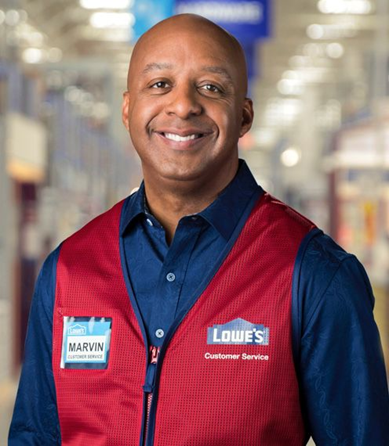
Photo from Lowe’s
To sum up, Ellison’s tenure has been marked by success thus far. However, his rise to the top didn’t happen overnight… and that’s what makes his story worth talking about, especially as it offers an important career-driven insight.
Climbing The C-Suite

Photo from Unsplash
Ellison’s rise to the top didn’t come easy as he had to overcome multiple hurdles throughout his life. As a university student, he funded his studies by working as a forklift driver, truck driver, and a janitor.
After earning his degree from the University of Memphis in 1989, Ellison started his professional career at Target, where he initially started as a security guard until he got promoted to a corporate director role.
By 2002, he joined Home Depot and held multiple executive positions. Fast forward to 2014, he joined department store chain JCPenney as CEO. During his tenure there, he developed a reputation for being capable of transforming a company and managing crises.
By 2018, he had become the CEO of Lowe’s and has contributed to its steady growth while managing crises like the COVID-19 pandemic.
It’s clear Ellison had a long and challenging climb to the top. But how exactly was he able to successfully do this?
According to him, he got ahead by chasing the job nobody wants.
Ellison said:
“When you don’t have an impressive pedigree, when you don’t have a resume that will stand out, the way that you get people to notice you is, you take jobs that nobody else wants, and you work really hard to be successful.”
Once you take the job nobody wants and successfully turn things around, you could find yourself positioned for a better opportunity, according to him.
Ellison also said that each new role came with new opportunities, and that he strove to maintain high levels of effort and stay dedicated.
This attitude can separate an individual from his or her peers, essentially enabling a professional to stand out.
This advice isn’t just lip service—as mentioned before, Ellison has taken unglamorous roles early on in his career… and when he was moving up the ladder, he ended up filling roles where either someone was fired or was pressured to leave.
Taking on the roles nobody wants is challenging, but as Ellison’s story has shown, it can be an effective career advancement strategy, especially when you do well in those roles.
The CDS Connection
Ellison’s career advice and story may not seem aligned with Professor Joel Litman and Dr. Mark L. Frigo’s CDS framework. However, there’s definitely a connection.
CDS is designed to help professionals and leaders alike innovate and improve. In Ellison’s case, taking the job nobody wanted demonstrated fulfilling unmet needs—a core tenet of CDS.
By taking on unglamorous and unwanted roles and thriving in them, Ellison provided unmet needs, which set himself apart from the rest.
So, if you’re hungry to rise to the top and eager to thrive in challenging roles, adopt Ellison’s career advice and emulate the blueprint he laid out.
In today’s fast-moving job landscape, this philosophy just might be what you need to elevate your career to the next level!
—
As discussed above, talent (or the lack thereof) could make or break a company’s ability to meet the needs of its customers.
That’s why it’s important for leaders to understand just how important employees are.
After all, without them, a company cannot fulfill unmet needs—and firms that are unable to do so are bound to perform poorly.
If you’re looking to gain a better understanding of Return Driven Strategy and Career Driven Strategy, we highly recommend checking out “Driven” by Professor Litman and Dr. Frigo.
Click here to get your copy and learn how this framework can help you in your business strategies and ultimately, in ethically maximizing wealth for your firm.
About The Dynamic Marketing Communiqué’s
“Tuesdays: Return Driven Strategy”
In the book, “Driven,” authors Professor Joel Litman and Dr. Mark L. Frigo said that the goal of every long-term successful business strategy should incorporate the combined necessity of “making the world a better place” and “getting wealthy.”
That is why they created Return Driven Strategy and Career Driven Strategy―frameworks that were built to help leaders and professionals plan and evaluate businesses so they can also help others achieve their organizational goals and career goals.
The frameworks describe the plans and actions that drive returns for anyone in an organization such as independent contractors, marketers, brand managers, communicators, and other people in any field. These actions lead to the creation of wealth and value for customers, employees, shareholders, and the society.
Every Tuesday, we’ll highlight case studies, business strategies, tips, and insights related to Return Driven Strategy and Career Driven Strategy.
In planning, building, or managing brands and businesses, these strategies, case studies, and guidelines will help you choose what specific actions to take and when to take them.
Hope you find this week’s topic interesting and helpful.
Stay tuned for next Tuesday’s “Return Driven Strategy!”
Cheers,
Adrian Kyle Vergara
Content Writer
Valens Dynamic Marketing Capabilities
Powered by VX Dynamic
www.vxdynamic.com
