
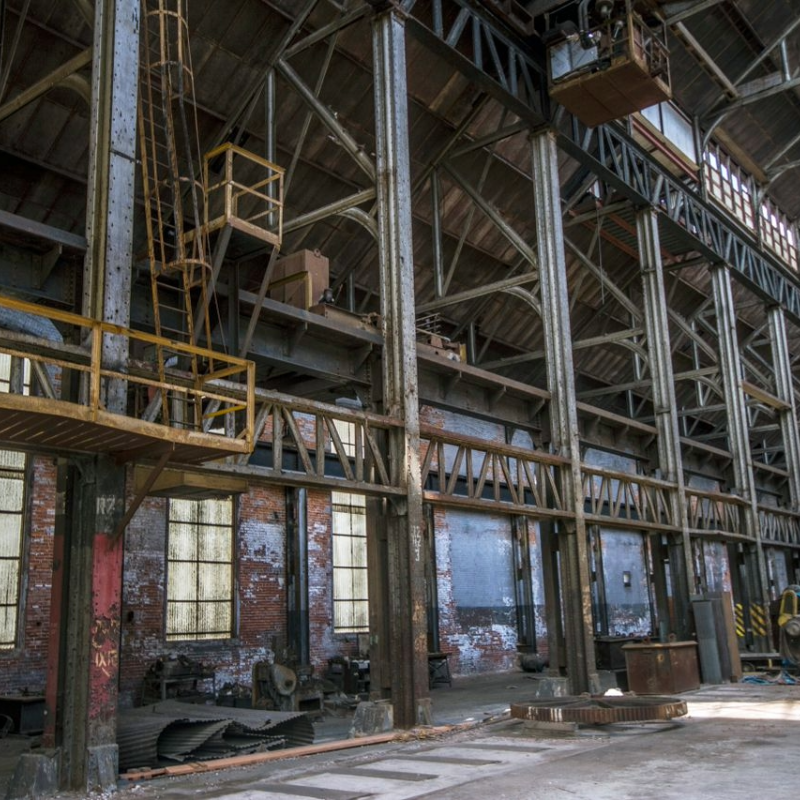

Have you ever watched a colossal empire crumble, piece by piece, and wondered how something so dominant could lose its footing—how decades of power, influence, and wealth can vanish not because the idea was bad, but because the strategy didn’t actually create lasting value?
Well, there’s a lot to learn from such stories… lessons that reach far beyond the boardroom and touch the very foundation of how businesses define success.
One of the most striking examples comes from the American steel industry: Bethlehem Steel, a company that was once synonymous with industrial strength, national infrastructure, and the American dream of prosperity.
Yet, despite its size and historical importance, it became a textbook case of value destruction.
Plus, the story of its rise and fall has profound relevance for modern business leaders, particularly through the lens of Professor Joel Litman and Dr. Mark L. Frigo’s Return Driven Strategy (RDS).
Bethlehem Steel: An American Industrial Titan
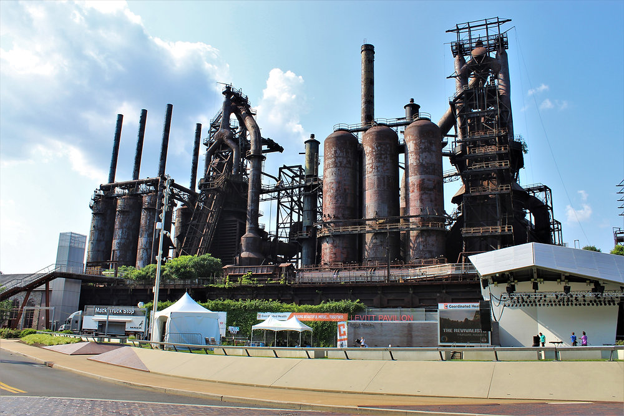
Photo from Discover America
Founded in the late 19th century in Bethlehem, Pennsylvania, Bethlehem Steel quickly became one of the U.S.’ largest steel producers. Its steel built the backbone of American infrastructure: railroads, skyscrapers, bridges, and naval ships, including thousands during World Wars I and II.
At its peak, the company employed hundreds of thousands of workers, fueling economic growth across the “Rust Belt” and defining the industrial age of America.
[Rust Belt: Parts of the northeastern and midwestern U.S. that are characterized by declining industry, aging factories, and a falling population.]
Bethlehem Steel was more than a steel company; it was a symbol of American industrial might, ambition, and the promise of upward mobility. Its name was known from Wall Street to small towns where steel mills shaped community life.
The Business Strategy That Defined Its Journey
Bethlehem Steel’s strategy evolved over time, reflecting both ambition and the pressures of a changing world:
- Scale and Vertical Integration – The company invested heavily in controlling its supply chain, acquiring mines, mills, and shipyards to ensure it could produce steel at massive scales. This made Bethlehem a behemoth capable of meeting enormous infrastructure projects.
- Focus on Heavy Industry and Infrastructure – For decades, Bethlehem targeted large-scale industrial and governmental contracts, from bridges to naval vessels, cementing its reputation as a reliable supplier for monumental projects.
- Diversification Efforts – In the latter half of the 20th century, Bethlehem attempted to expand into plastics, chemicals, and other industrial segments, aiming to offset the declining margins in steel. While innovative in intent, these efforts never produced the scale or returns needed to stabilize the company.
- Limited Modernization – Perhaps most crucially, Bethlehem Steel struggled to modernize its core operations. Competitors, particularly foreign steelmakers and domestic mini-mills, adopted new technologies faster, producing steel more efficiently and cheaply. Bethlehem’s legacy processes, coupled with massive labor costs, eroded its competitiveness.
- Managing Legacy Costs – Generous pensions and health benefits for retirees became a financial albatross. As profits declined, these obligations weighed heavily on the balance sheet, constraining flexibility and driving long-term unsustainable costs.
However, despite these impressive strategies, Bethlehem still had its fair share of issues that eventually led to its collapse…
- Competition from Cheaper Imports – Global steelmakers, particularly in Japan and South Korea, produced high-quality steel at lower costs. Bethlehem could not compete without drastic restructuring.
- High Labor and Benefit Costs – Longstanding union contracts, while historically critical for workers, created financial rigidity that could not adjust to changing market conditions.
- Bankruptcy and Asset Divestiture – By 2001, Bethlehem filed for Chapter 11 bankruptcy. Assets were sold off, operations were closed, and the company ultimately dissolved in 2003.
- Economic and Social Ripple Effects – Beyond the company, local communities suffered massive job losses, declining tax bases, and the slow unraveling of once-thriving industrial towns.
In short, Bethlehem Steel failed to generate returns above its cost of capital for decades, leaving shareholders, employees, and communities worse off—a textbook case of destroying value over time.
This is where RDS’ Tenet 1—Ethically Maximize Wealth—comes into sharp focus. Tenet 1 isn’t about generating profits at all costs but about creating sustainable, long-term wealth for all stakeholders, ethically and responsibly.
Bethlehem Steel violated the core principles of Tenet 1 in several ways:
- Ignoring Sustainable Value Creation – Despite high revenues and market presence, the company failed to earn returns above its cost of capital. Profits did not translate into enduring wealth, either for shareholders or for the broader economy.
- Neglecting Stakeholder Alignment – Long-term obligations to employees were not matched with strategies that ensured competitive, profitable operations. This misalignment contributed directly to financial collapse.
- Short-Term Focus Masked by Legacy Power – Bethlehem’s historical dominance created a false sense of security. Decisions were made to maintain employment or output in the short term rather than optimizing long-term returns, eroding value over decades.
- Ethical Implications – While not unethical in the traditional sense, failing to adapt strategy responsibly and thereby destroying jobs and economic opportunity for communities represents a failure to maximize wealth ethically, a key principle of Tenet 1.
In essence, Bethlehem Steel’s story illustrates the danger of confusing scale and legacy for value creation.
Without focusing on actual economic returns and long-term stakeholder wealth, even an industrial giant can slowly dismantle its own foundation.
Lessons for Today
Bethlehem Steel may be gone, but its lessons live on:
- True power comes from sustainable value creation, not just market dominance.
- Aligning every business decision with stakeholder wealth is important.
- Legacy and tradition are strengths only when paired with modernization and competitive agility.
- Ignoring Tenet 1 of RDS can destroy not only a company but also entire communities.
The story of Bethlehem Steel reminds modern business leaders: Success is not a measure of size or history…
The more important bottom line is the lasting value you create for you, your business, and your stakeholders—ethically, efficiently, and consistently.
If you’re looking to gain a better understanding of Return Driven Strategy and Career Driven Strategy, we highly recommend checking out “Driven” by Professor Litman and Dr. Frigo.
Click here to get your copy and learn how this framework can help you in your business strategies and ultimately, in ethically maximizing wealth for your firm.
About The Dynamic Marketing Communiqué’s
“Tuesdays: Return Driven Strategy”
In the book, “Driven,” authors Professor Joel Litman and Dr. Mark L. Frigo said that the goal of every long-term successful business strategy should incorporate the combined necessity of “making the world a better place” and “getting wealthy.”
That is why they created Return Driven Strategy and Career Driven Strategy―frameworks that were built to help leaders and professionals plan and evaluate businesses so they can also help others achieve their organizational goals and career goals.
The frameworks describe the plans and actions that drive returns for anyone in an organization such as independent contractors, marketers, brand managers, communicators, and other people in any field. These actions lead to the creation of wealth and value for customers, employees, shareholders, and the society.
Every Tuesday, we’ll highlight case studies, business strategies, tips, and insights related to Return Driven Strategy and Career Driven Strategy.
In planning, building, or managing brands and businesses, these strategies, case studies, and guidelines will help you choose what specific actions to take and when to take them.
Hope you find this week’s topic interesting and helpful.
Stay tuned for next Tuesday’s “Return Driven Strategy!”
Cheers,
Adrian Kyle Vergara
Content Writer
Valens Dynamic Marketing Capabilities
Powered by VX Dynamic
www.vxdynamic.com
