
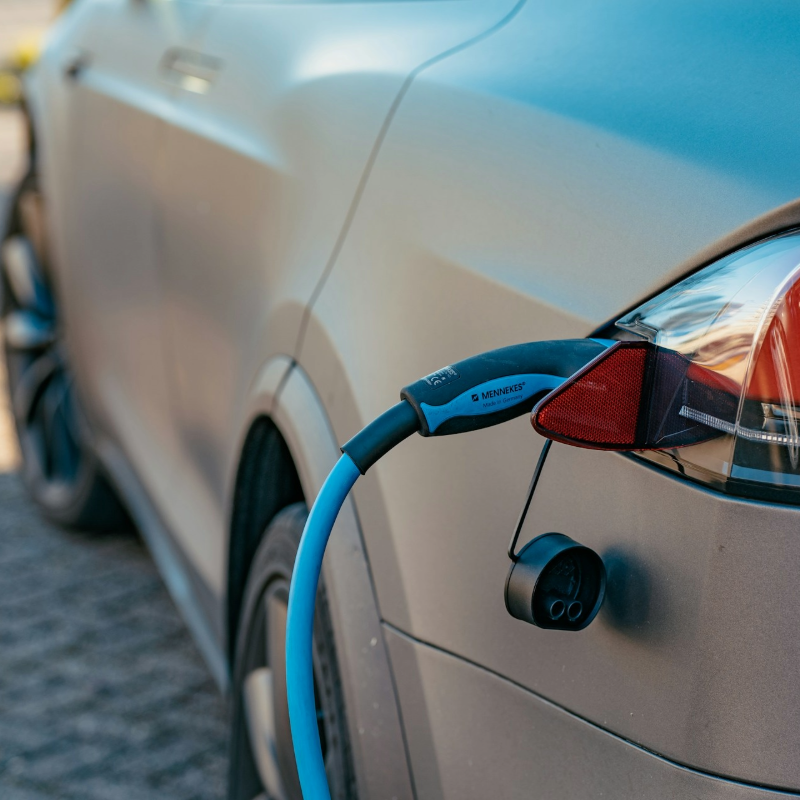

The transition to electric vehicles (EV) was hyped as one of the most significant developments in the automotive industry.
Over the last few years, EV technology has improved tremendously due to the massive research and development spending undertaken by automakers.
This trend was further boosted by the Biden administration, which enacted various clean-air and fuel economy mandates alongside EV-related subsidies.
Photo from Unsplash
However, it seems that instead of going full steam ahead, the EV transition has ground to a halt as the subsidies and tax breaks that propped up the EV industry were clawed back last year.
U.S. EV adoption forecasts dropped. EVs only make up about 8% of today’s new vehicle sales. Analysts previously forecast that number to reach 48% by 2030. Instead, this forecast has been revised to 27%.
In other words, the strategies automakers have worked with in the past few years are no longer viable.
Industry-wide write-offs have been ugly. In 2025, Ford, one of America’s biggest automakers took a nearly USD 20 billion hit. Meanwhile, automakers who took a big swing on EV have taken hits to the tune of roughly USD 50 billion.
Since the EVs are already a multibillion-dollar bust, automakers and their battery partners are working on redeploying their capital.
For example, Ford revealed in 2025 that it would redeploy its capital to the manufacture and development of gas-powered vehicles, hybrids, and extended-range EVs that are equipped with traditional combustion engines.
Aside from reinvesting capital into other types of vehicles, Ford and other automakers are pouring money into building a battery storage business for artificial intelligence (AI) infrastructure customers.
Wait…
Why AI?
You see, energy storage systems have become critical to the AI data centers powering the AI boom.
These systems provide uninterrupted power to AI data centers to avoid outages. In some cases, these can even be used to help buyers skip the grid interconnection line entirely.
At present, North American automakers are overhauling roughly 10 plants to manufacture batteries for AI data center opportunities. These firms include Ford, Stellantis, and General Motors.
Seen through RDS’ third tenet—target and dominate markets—this pivot makes some sense.
After all, as Professor Joel Litman and Dr. Mark L. Frigo pointed out in the book, “Driven,” “firms are seldom stuck in an industry” and when need be, pivot out of one or establish exposure in some other industry.
The pivot of these automakers to storage batteries isn’t a bad thing in theory; after all, it’s better for factories to be doing something rather than idly sitting by.
Rushing in to make batteries for data centers would flood the market.
On top of this, energy storage is already competitive. Chinese battery makers already sell backup batteries to data centers operators for less than what U.S.-based producers like Tesla charge for.
We’re not saying this pivot won’t be successful. It remains too early to tell.
However, this pivot may not be as profitable as it’s being cracked up to be.
Yes, plants will stay active and that might excite investors, even if it’s in the short term… but there’s not much of a competitive edge in the pivot, especially as it could flood an already-competitive market—the opposite of what any business and investors would want.
This offers a cautionary tale.
Strategic pivots are part and parcel of a company’s survival and ability to deliver strong returns.
Despite this, not every shift is a sure-fire winner. Sometimes, a pivot’s chances of success can be murky, even though it appears like a winning move on paper.
—
If you’re looking to gain a better understanding of Return Driven Strategy and Career Driven Strategy, we highly recommend checking out “Driven” by Professor Litman and Dr. Frigo.
Click here to get your copy and learn how this framework can help you in your business strategies and ultimately, in ethically maximizing wealth for your firm.
About The Dynamic Marketing Communiqué’s
“Tuesdays: Return Driven Strategy”
In the book, “Driven,” authors Professor Joel Litman and Dr. Mark L. Frigo said that the goal of every long-term successful business strategy should incorporate the combined necessity of “making the world a better place” and “getting wealthy.”
That is why they created Return Driven Strategy and Career Driven Strategy―frameworks that were built to help leaders and professionals plan and evaluate businesses so they can also help others achieve their organizational goals and career goals.
The frameworks describe the plans and actions that drive returns for anyone in an organization such as independent contractors, marketers, brand managers, communicators, and other people in any field. These actions lead to the creation of wealth and value for customers, employees, shareholders, and the society.
Every Tuesday, we’ll highlight case studies, business strategies, tips, and insights related to Return Driven Strategy and Career Driven Strategy.
In planning, building, or managing brands and businesses, these strategies, case studies, and guidelines will help you choose what specific actions to take and when to take them.
Hope you find this week’s topic interesting and helpful.
Stay tuned for next Tuesday’s “Return Driven Strategy!”
Cheers,
Adrian Kyle Vergara
Content Writer
Valens Dynamic Marketing Capabilities
Powered by VX Dynamic
www.vxdynamic.com
