


Sometimes your career feels like a series of accidents disguised as opportunities.
—a random conversation that nudges you into a new direction, a talent you didn’t know you had turning into something important, or a setback that forces you to rethink everything.
You look back years later and realize your path wasn’t linear at all… yet somehow, the puzzle pieces fit perfectly.
However, what if these turns don’t have to be accidental?
What if the “puzzle” can be designed strategically, creatively, AND intentionally?
That’s exactly where one person’s story becomes a masterclass.
The Organizational Psychologist Who Made Rethinking His Superpower
Adam Grant is one of those rare thinkers who blends academic rigor, real-world practicality, and personality. Today, he’s one of the world’s most influential organizational psychologists, bestselling authors, and professors at Wharton.
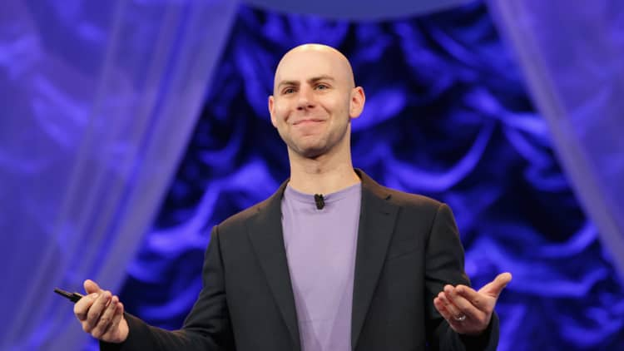
Photo from CNBC
… but if you trace his path backward, the threads of his career reveal something far more interesting: A strategic, intentional evolution that mirrors Professor Joel Litman and Dr. Mark L. Frigo’s Career Driven Strategy (CDS).
To understand why his story matters, you have to know the person behind the research…
Long before Grant became a globally recognized thought leader, he was a kid who loved understanding people, but not in the way psychologists typically begin.
He was a magician. Yes, literally. You know, sleight-of-hand tricks at birthday parties and all that.
He was also a Junior Olympic springboard diver, which taught him discipline, resilience, and the courage to try new things even when failure looked embarrassing.
These two unlikely pursuits planted the seeds of skills he would later cultivate:
- Showmanship and communication
- Focus under pressure
- The ability to perform, fail, review, and improve
Without knowing it, young Grant was building the “genuine assets”—innate strengths and learned capabilities—that Professor Litman and Dr. Frigo describe at the base of CDS.
Later on, Grant went to Harvard for his undergrad degree and later pursued a Ph.D. in organizational psychology at the University of Michigan.
However, his early academic career was shaped by a surprising emotion: self-doubt. He questioned his own abilities, worried about not measuring up, and was more introverted and cautious than the image most people see today.
Fortunately, this exact mindset would later become one of his greatest strengths.
“Rethinking,” the core idea in his book “Think Again,” started as something he had to practice personally.
This is where CDS fits beautifully:
- Identify unmet needs – Grant asked, “How do people stay motivated, resilient, and purpose-driven?”
- Innovate to fulfill those needs – He started researching generosity, motivation, meaning, creativity, and resilience.
- Build relationships and create value – He mentored students, worked closely with companies, and brought academic insights to practical, high-impact spaces.
According to CDS:
Your unique experiences + the unmet needs in your environment = your strategic career path.
… and Grant is a living example of that.
By age 28, Grant became the youngest tenured professor in Wharton history.
How?
Not by trying to impress people but by serving them!
This is where his “giver” philosophy (from his book, “Give and Take”) was born.
Here, he studied the behavioral patterns of people who help others without expecting anything in return. He learned that givers, when strategic and supported, often outperform takers and matchers over the long term.
In CDS terms:
- Fulfilling unmet needs — Students needed a teacher who made research relatable. Organizations needed someone who could translate psychology into real change.
- Engaging others — Grant built learning communities, mentorship ecosystems, and collaborative networks.
- Creating value ethically — His generosity wasn’t a tactic; it was a strategy grounded in integrity and service.
See?
What makes Grant fascinating isn’t only his intellect but also his strategic clarity.
Every chapter of his life is a demonstration of the CDS philosophy:
- Identify your unique assets
- Study the forces of change
- Build value through service, generosity, and innovation
- Turn challenges into catalysts
- Continually rethink who you are and what you bring to the world
In other words…
Grant didn’t just build a career. He designed one intentionally, ethically, AND intelligently—things Professor Litman and Dr. Frigo teach as part of CDS.
The BIG lesson here?
A great career isn’t discovered; it’s designed.
After all, success doesn’t come from waiting for your path to open; it comes from understanding what the world needs and then offering the best version of what only you can give.
Grant proves that your early quirks, doubts, failures, and passions are not detours; they’re the building blocks of a career you can craft deliberately.
That’s the power of CDS.
… and that’s the brilliance of Grant’s journey—a story of purpose, mastery, rethinking, and value creation that you can learn from.
—
If you’re looking to gain a better understanding of Return Driven Strategy and Career Driven Strategy, we highly recommend checking out “Driven” by Professor Litman and Dr. Frigo.
Click here to get your copy and learn how this framework can help you in your business strategies and ultimately, in ethically maximizing wealth for your firm.
About The Dynamic Marketing Communiqué’s
“Tuesdays: Return Driven Strategy”
In the book, “Driven,” authors Professor Joel Litman and Dr. Mark L. Frigo said that the goal of every long-term successful business strategy should incorporate the combined necessity of “making the world a better place” and “getting wealthy.”
That is why they created Return Driven Strategy and Career Driven Strategy―frameworks that were built to help leaders and professionals plan and evaluate businesses so they can also help others achieve their organizational goals and career goals.
The frameworks describe the plans and actions that drive returns for anyone in an organization such as independent contractors, marketers, brand managers, communicators, and other people in any field. These actions lead to the creation of wealth and value for customers, employees, shareholders, and the society.
Every Tuesday, we’ll highlight case studies, business strategies, tips, and insights related to Return Driven Strategy and Career Driven Strategy.
In planning, building, or managing brands and businesses, these strategies, case studies, and guidelines will help you choose what specific actions to take and when to take them.
Hope you find this week’s topic interesting and helpful.
Stay tuned for next Tuesday’s “Return Driven Strategy!”
Cheers,
Adrian Kyle Vergara
Content Writer
Valens Dynamic Marketing Capabilities
Powered by VX Dynamic
www.vxdynamic.com
