
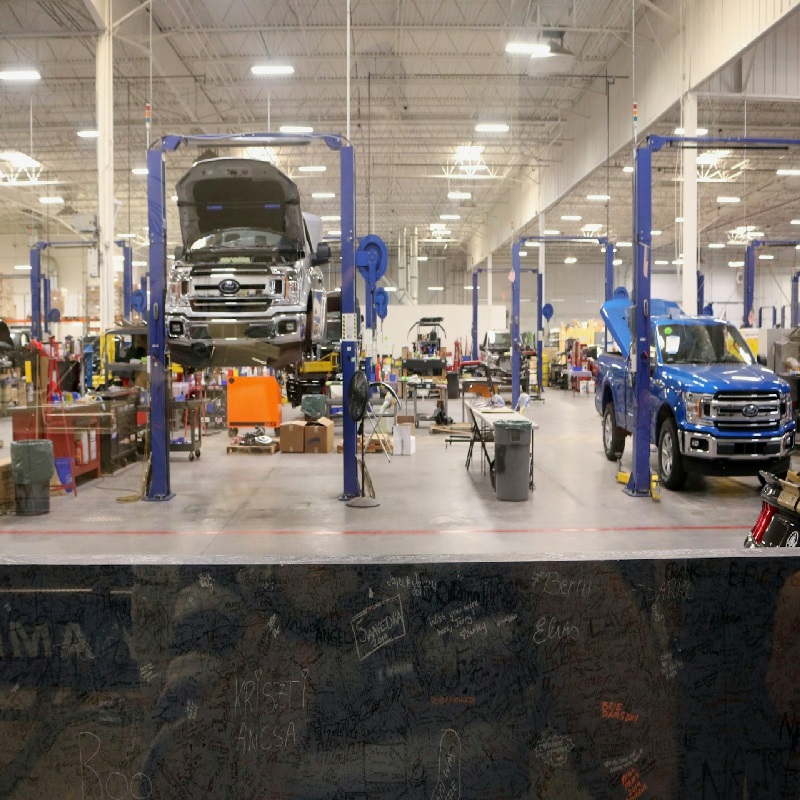

The Ford Motor Company is one of America’s biggest automotive companies, owning around 13% of the U.S. market as of 2024.
Last year, Ford sold roughly 2.2 million cars, representing a 6% increase in sales—the company’s best since 2019.
Aside from being one of the biggest automotive firms in the U.S., Ford currently ranks among the top automotive manufacturers across the globe, trailing the likes of Stellantis, General Motors, Hyundai, Volkswagen, and Toyota.
Due to its status as a global player, Ford employs over 170,000 employees globally.

Photo from Unsplash
However, despite having a 170,000-strong workforce, the company currently has an ongoing talent problem.
Ford CEO Jim Farley, speaking on a podcast in November 2025, said the company’s dealerships currently has 5,000 open jobs, including openings for auto technicians who play a crucial role after sales service for Ford vehicles.
Before we take a deep dive on this issue, we need to understand why talent shortages can be a big problem for companies.
The Importance of Talent
In the book, “Driven,” Professor Joel Litman and Dr. Mark L. Frigo highlighted the importance of employees.
According to them, “companies succeed when employees and other individuals are aligned with the organization’s goals in creating and delivering the offerings that fulfill customers’ unmet needs.”
In Ford’s case, the mechanic shortage is detrimental for both its brand and customers.
Dealerships wouldn’t be able to handle high-margin maintenance work such as engine repairs or other specialized repairs without highly-skilled mechanics.
For example, transmission repairs, depending on complexity, could take as little as a few hours to days to complete. With a skilled mechanic, this might take less time.
Unfortunately, there’s not a lot of skilled mechanics around. Not only is this kind of work physically demanding but it also takes years and lots of money to get the training and experience needed to be a full-fledged mechanic. As a result, many mechanics switch careers long before they get the certification and experience needed to command higher pay, further exacerbating the shortage.
This brings us to customer satisfaction.
If there aren’t enough mechanics around, dealerships would have a hard time fulfilling repair requests or would take a long time to fulfill them.

Photo from Unsplash
Worse, some of them might even be forced to turn potential customers away due to lack of skilled manpower.
The result of these cascading problems? Unhappy customers.
Uh-oh.
… and in turn, unsatisfied customers lead to lower retention rates and repeat purchases. In some cases, they might even leave negative feedback to other would-be buyers, which is damaging to brand image.
Enticing Prospective Employees
Ford is aware of the issue it’s facing. That’s why it has taken a strategic step to boost its recruitment offers.
Last week, the automaker announced a partnership with Carhartt, a 137-year-old workwear brand that would lead to the creation of a multi-year training assistance program for blue-collar workers.
The partnership seeks to entice and train workers to get into blue collar work. This program includes lending 25,000 tools annually to workers and volunteers.
This initiative is best explained through the lens of RDS.
Professor Litman and Dr. Frigo noted that “high-performance firms treat their employees like customers, understanding exactly what services they would like to receive from employees, and designing incentive systems that fulfill employees’ needs in order to get those services.”
In the case of Ford, its initiative with Carhartt is meant to attract potential talent that would help fill the company’s talent void.
—
As discussed above, talent (or the lack thereof) could make or break a company’s ability to meet the needs of its customers.
That’s why it’s important for leaders to understand just how important employees are.
After all, without them, a company cannot fulfill unmet needs—and firms that are unable to do so are bound to perform poorly.
If you’re looking to gain a better understanding of Return Driven Strategy and Career Driven Strategy, we highly recommend checking out “Driven” by Professor Litman and Dr. Frigo.
Click here to get your copy and learn how this framework can help you in your business strategies and ultimately, in ethically maximizing wealth for your firm.
About The Dynamic Marketing Communiqué’s
“Tuesdays: Return Driven Strategy”
In the book, “Driven,” authors Professor Joel Litman and Dr. Mark L. Frigo said that the goal of every long-term successful business strategy should incorporate the combined necessity of “making the world a better place” and “getting wealthy.”
That is why they created Return Driven Strategy and Career Driven Strategy—frameworks that were built to help leaders and professionals plan and evaluate businesses so they can also help others achieve their organizational goals and career goals.
The frameworks describe the plans and actions that drive returns for anyone in an organization such as independent contractors, marketers, brand managers, communicators, and other people in any field. These actions lead to the creation of wealth and value for customers, employees, shareholders, and the society.
Every Tuesday, we’ll highlight case studies, business strategies, tips, and insights related to Return Driven Strategy and Career Driven Strategy.
In planning, building, or managing brands and businesses, these strategies, case studies, and guidelines will help you choose what specific actions to take and when to take them.
Hope you find this week’s topic interesting and helpful.
Stay tuned for next Tuesday’s “Return Driven Strategy!”
Cheers,
Adrian Kyle Vergara
Content Writer
Valens Dynamic Marketing Capabilities
Powered by VX Dynamic
www.vxdynamic.com
