
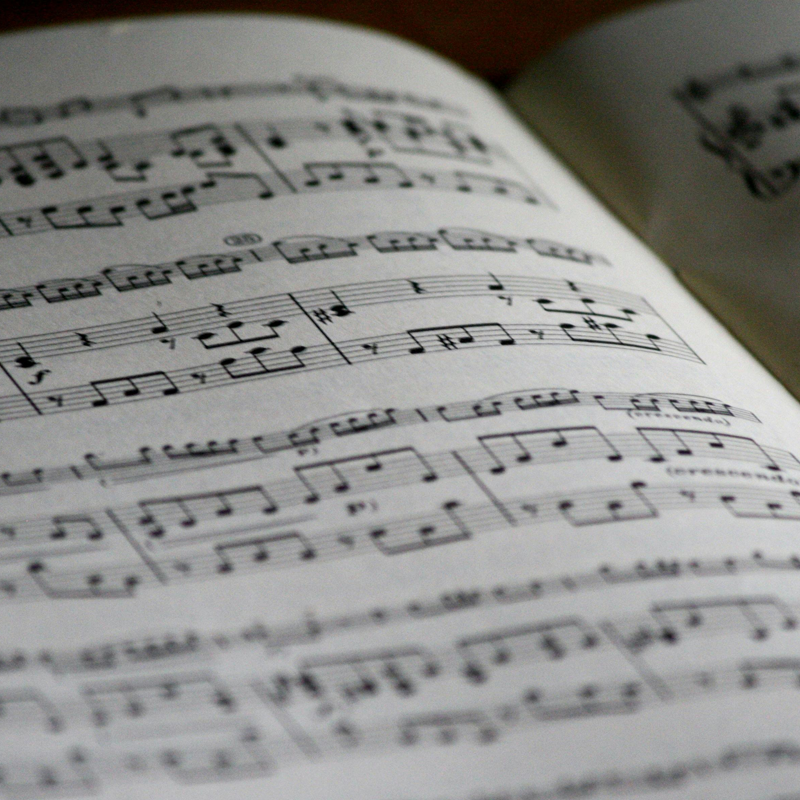

There are moments when a piece of writing feels less like ink on a page and more like a living thing—something breathing, pulsing, moving with purpose.
You can’t always explain why.
Maybe a sentence hits with the force of a thrown stone. Maybe another flows with the ease of a rising tide. Whatever the reason, the experience sticks with you.
That’s where Joseph Bizup and Joseph M. Williams step in—not as grammar police or academic gatekeepers, but as guides revealing the hidden mechanics behind why some writing moves while other writing merely sits still.
In their influential book, “Style: Lessons in Clarity and Grace,” the two dissect something most writers rarely think about consciously:
The rhythm and length of sentences and the art that emerges when those choices become intentional.
What follows is not just an explanation of ideas but also an exploration of why sentence rhythm is one of the most underestimated tools any writer can use.
How Sentence Length Shapes Emotion, Energy, and Experience
Bizup and Williams argue that most writers don’t set out to design long or short sentences. They simply… write.
… and often, that’s enough. However, when every sentence becomes uniformly long or uniformly short, something essential goes missing: RHYTHM.
Artful writers—those who use prose like composers use melody—lean into sentence length not by accident but by choice. They know that a short sentence can be a punch, and a long one can be a wave.
Take political theorist Leon Trotsky, who used compressed, hard-hitting lines to capture the urgency of a revolution unfolding moment by moment. Trotsky’s staccato reporting of Petrograd in chaos doesn’t merely inform; it pounds.
Bizup and Williams highlight how short sentences can channel urgency, clarity, or even brutal certainty.
Poet and critic Ezra Pound knew this well. His clipped meditations on teaching feel cold, sharp, and scathing, not because of the words alone, but because of the rhythm those words create.
Basically, short sentences accelerate the reader’s heartbeat. They force attention and they demand presence.
… but then, there are moments when language expands, when meaning requires breath, and when a thought unspools slowly and intentionally.
Bizup and Williams use examples from writer and humorist Mark Twain, who created two different experiences simultaneously: Childlike directness through simple grammatical sentences and adult amusement through long, punctuated ones.
The length mirrors the thought process, building layers of humor, wisdom, and warmth.
Then there is writer and journalist Norman Mailer, whose famously sprawling sentence about a protest march becomes a living simulation of chaos, emotion, confusion, and revelation.
Bizup and Williams dissect how this sentence—seemingly wild—is actually masterfully controlled through coordinated modifiers and carefully placed resumptive phrases.
See?
A long sentence, done right, is not excess but embodiment.
Sentence length, Bizup and Williams insist, is not a rule to obey but a tool to wield.
Writers should worry only when every sentence is too long or every sentence is too short.
Most prose finds its rhythm naturally when a writer edits with intention and reads with a sensitive ear.
In fact, there’s an invitation embedded in this lesson:
If the moment allows, experiment.
Play with rhythm. Try a sentence that crackles. Try one that winds like a road in the countryside. See how each feels in the mind. Observe how the meaning changes with the structure.
Always remember that great style is not an accident but a craft.
The Three Elements of Elegant Writing
Toward the end of their book’s chapter, Bizup and Williams offer something rare: A concise but powerful summary of what elegant writing is made of.
According to them, elegant passages balance three seemingly contradictory qualities:
-
Simplicity
Characters as subjects. Actions as verbs. Writing that feels honest, direct, and unpretentious.
-
Complexity
Not complexity of meaning alone, but of balance—sound, rhythm, symmetry, and syntactic harmony.
-
Emphasis
Endings that land with intention. Final words that matter.
When placed together, these elements create writing that feels effortless and evocative. However, Bizup and Williams make one thing clear:
You don’t develop elegance by memorizing rules. You develop it through exposure.
After all, elegance isn’t learned; it’s absorbed.
Read writers who make your brain hum. Let their style seep into your instincts. Only then will you begin recognizing elegance in your own prose and distinguishing it from mere decoration.
What else?
In Bizup and Williams’ view, the ultimate test of style is not ornamentation but restraint.
“Less is more,” as they say.
Compression, then, is the first grace of style.
—
Bizup and Williams’ insights aren’t just for novelists or literary stylists. They are also for lawyers, analysts, CEOs, marketers, teachers, researchers—anyone whose work relies on clarity and persuasion.
… because behind every powerful message is not just what the writer says, but also how they say it.
Besides, sentence rhythm is the silent engine of persuasion.
… and when a writer starts paying attention to it—even just a little—their work transforms.
Hope you learned a lot from today’s topic!
About The Dynamic Marketing Communiqué’s
“Wednesdays: Write with the Pen of the Masters”
Who doesn’t find content writing to be a skill that requires a lot of practice and effort?
In fact, many people may even find copywriting very intimidating.
However, you can be a good writer as long as you have the right tools. You won’t always get things right the first time, but with enough time and practice, you’ll get the hang of it!
When you write copy for any brand or for your company, your aim is to make an impact and…
… to get people to remember.
Getting people to remember means getting consumers to buy your product or avail of your service.
… and when you get your content to deliver the results you want, THAT is great copy!
Every Wednesday, we publish content based on tips and insights from the masters of content writing, copywriting, and storytelling.
Become more familiar with ways to write great copy that helps you gain ROI from your efforts, drive profitability, and achieve your business goals.
Learn time-tested tactics that better capture the attention of your target audience, and maximize the benefits of great copywriting.
Hope you find this week’s insights interesting and helpful.
Stay tuned for next Wednesday’s “Write with the Pen of the Masters!”
Cheers,
Dyane Diasanta
Senior Content Writer
Valens Dynamic Marketing Capabilities
Powered by VX Dynamic
www.vxdynamic.com
