


For the past decade, Nike and Adidas have dominated the U.S. sportswear and athletic footwear markets in both brand awareness and market share.
This dominance runs so deep that even established competitors like New Balance, Reebok, and Under Armour have struggled to leapfrog these market leaders, despite carving out their own positions in this highly competitive space.
Then, in the mid-2010s, athleisure, a trend that spurred the creation of fashion-forward athletic apparel and footwear, took hold. Consumers weren’t just after performance footwear and clothing; they wanted something stylish as well.
As this trend went on, another one emerged during the latter years of the decade: Running shoes saw a resurgence in popularity, a revival that Nike itself helped drive. As customer demand for running shoes surged, Nike’s competitors quickly followed suit by building up and marketing their own product lines.
Simply said, the athletic footwear market is so highly concentrated that breaking through would be immensely challenging, if not borderline impossible, for any newcomer.
Yet despite these nearly insurmountable odds, a Swiss shoemaker has slowly but surely positioned itself to be a legitimate competitor to the likes of Nike and Adidas.
Its name?
On Holding AG (popularly known as On)!
An Upstart Taking on Giants
On was co-founded in 2010 by Swiss triathlete Olivier Bernhard and McKinsey & Co. alumni Caspar Coppetti and David Allemann.
The Swiss company initially began as a personal project of Bernhard after he retired professionally in 2005. This personal project of his involved creating a new type of running shoe that enabled wearers to enjoy both a soft landing and explosive takeoff when running.
Initially, Bernhard shopped his idea to Nike and Adidas, brands who had sponsored him during his professional career. However, his overtures got rejected, prompting him to pursue the project on his own.
The first prototype of what would be On’s first signature shoe and iconic design was made with a tubular outsole created from bits of a garden hose. After further refinements, this cushion design called CloudTec was made to resemble clouds.
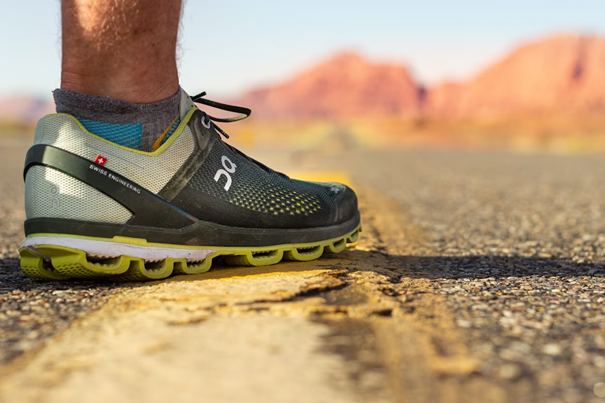
Photo from Unsplash
In 2012, On released Cloudsurfer, its first shoe. In the years that followed its release, the shoemaker developed and sold various models catered to its core market: runners.
From then on, the company slowly built its market share in its home market of Switzerland and neighboring countries such as Germany and Austria.
As the 2010s went on and as Nike and the rest of its competitors focused on fashion-forward designs instead of performance, a void in the running shoe market started to form.
… and as running culture started to peak, customers were hungry for footwear that were designed specifically for running.
That’s where On came in, as it took advantage of this demand by further positioning itself as one of the premier brands for running shoes. LIkewise, this led the company to build its presence in the U.S. running shoe market.
Over the past three years, this market has expanded by 20% and is expected to keep growing than other footwear segments as only 43% of consumers have chosen running shoes for their physical activities like exercise.
Last year, On brought in about USD 2.5 billion in sales. While this is still far below what Nike made in revenue, it’s still a significant achievement.
Industry observers are bullish on the Swiss shoemaker as well, as they expect it to generate USD 10 billion in annual sales by 2033, a milestone that rivals Lululemon nor Puma has not yet reached.
Leveraging the Power of Partnerships
It wasn’t just a great product nor marketing positioning that put the Swiss shoemaker on the map. Another factor that led to its growth was its ability to partner deliberately—RDS’ 7th tenet.
Professor Joel Litman and Dr. Mark L. Frigo in the book, “Driven,” underscored the importance of building partnerships. According to them, “any successful business leverages the partnership of a whole cast of players outside the firm.”
More importantly, it’s the strongest partnerships that allow a firm to innovate, “brand, and deliver unique need-fulfilling offerings.”
In the case of On, part of its success lay in its ability to engage in strategic collaborations with athletes, personalities, and other brands.
In 2019, tennis legend Roger Federer teamed up with On not only to endorse the brand but as a shareholder. This partnership came about as Federer was impressed with the shoemaker’s products and designs.
On subsequently launched a line of tennis shoes named after Federer, which helped draw attention towards its brand.
Aside from teaming up with athletes like Federer, On realized it needed to appeal to a younger cohort and female consumers as well. That’s why in 2024, it inked a multi-year partnership with actress and singer Zendaya who brings with her millions of fans and massive star power.
The Swiss shoemaker also partnered with LVMH’s Loewe brand to create a line of products adorned with the aesthetics of high fashion and luxury.
An Upstart Competing With Giants
While On has yet to become as big as recognizable names like Nike or Adidas, it’s clear that the company is on the right track to become a key player not only in the world of running shoes but also in the footwear market as a whole.
Its story also shows that good products aren’t enough. A business, regardless of whether it’s competing in an emerging market or a highly concentrated one, will always need to partner with others to ensure its success.
—
If you’re looking to gain a better understanding of Return Driven Strategy and Career Driven Strategy, we highly recommend checking out “Driven” by Professor Litman and Dr. Frigo.
Click here to get your copy and learn how this framework can help you in your business strategies and ultimately, in ethically maximizing wealth for your firm.
About The Dynamic Marketing Communiqué’s
“Tuesdays: Return Driven Strategy”
In the book, “Driven,” authors Professor Joel Litman and Dr. Mark L. Frigo said that the goal of every long-term successful business strategy should incorporate the combined necessity of “making the world a better place” and “getting wealthy.”
That is why they created Return Driven Strategy and Career Driven Strategy―frameworks that were built to help leaders and professionals plan and evaluate businesses so they can also help others achieve their organizational goals and career goals.
The frameworks describe the plans and actions that drive returns for anyone in an organization such as independent contractors, marketers, brand managers, communicators, and other people in any field. These actions lead to the creation of wealth and value for customers, employees, shareholders, and the society.
Every Tuesday, we’ll highlight case studies, business strategies, tips, and insights related to Return Driven Strategy and Career Driven Strategy.
In planning, building, or managing brands and businesses, these strategies, case studies, and guidelines will help you choose what specific actions to take and when to take them.
Hope you find this week’s topic interesting and helpful.
Stay tuned for next Tuesday’s “Return Driven Strategy!”
Cheers,
Adrian Kyle Vergara
Content Writer
Valens Dynamic Marketing Capabilities
Powered by VX Dynamic
www.vxdynamic.com
