


In the early days of the Internet, search engines operated in much more different ways than they do today.
They ranked results by counting how frequent search terms appeared on the page.
This wasn’t wrong, but there was certainly a better way of going about it.
… and that’s exactly what a pair of computer scientists set out to prove in 1996 with PageRank, a research project they developed when they were pursuing their doctorate degrees in Stanford University.
PageRank would eventually evolve into what we know today as Google, the world’s most dominant and widely used search engine.
To understand Google’s dominance, we need to take a look at one of the key figures behind it: Sergey Brin!
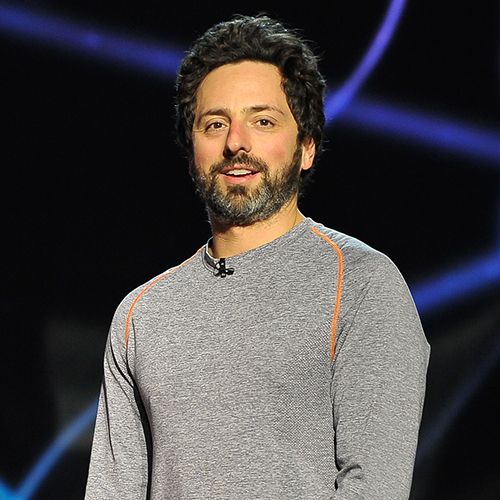
Photo from Biography
Brin was born in August 1973 in Moscow to parents of Russian and Jewish descent.
In 1979, they migrated to the U.S. with his father serving as a mathematics professor at the University of Maryland and his mother being a researcher at NASA’s Goddard Space Flight Center.
Due to his parents’ occupations, Brin acquired a similar affinity for science and technology. In 1993, he earned his degree in mathematics and computer science from the University of Maryland.
After earning his bachelor’s degree, he went on to receive his master’s degree in computer science at Stanford University in 1995. He also pursued his doctorate in computer science from the same university, but he has yet to earn the degree.
Brin’s life would change during his stint at Stanford University, as this is where he met Larry Page, with whom he collaborated with in developing the Google search engine.
As mentioned above, during their stint at Stanford University, Brin and Page worked on PageRank, an algorithm that determined a website’s relevance based on the number of pages and their importance that linked back to the original site.
This new search engine was originally named “BackRub” because it checked backlinks to determine the importance of a website.
Said another way, the search engine ranked web pages based on relevance and authority rather than keyword matching.
This was revolutionary because it addressed a problem of the early Internet: How to find reliable and relevant information in a crowded digital landscape.
Eventually, the pair would rename the search engine they developed to Google.

Photo from Unsplash
Fast forward to 2004, Google had solidified itself in the tech sector through its search engine business and had become a public company through an initial public offering (IPO).
Once Google had become large enough through strategic acquisitions like YouTube and releasing services and products like the email service Gmail, ad services provider Google Ads, and the Internet browser Chrome, Brin and Page announced the restructuring of the company under the umbrella of a new parent company called Alphabet in 2015.
Brin and Page served as Alphabet’s president and chief executive officer respectively, until stepping down in 2019.
Simply said, Brin has achieved immense success in his life not only as a computer scientist but also as a business leader.
What are the keys to his success?
- Keeping an eye on cutting-edge innovations and capitalizing on opportunities.
Brin’s foray into the development of Google’s search engine algorithm was motivated by his scientific curiosity and desire to innovate.
Aside from maintaining an innovative mindset, he likes to keep his eye on opportunities that would help Google in the long run, such as the acquisition of YouTube and the development of ad services that complemented the company’s search engine business.
Even though Brin stepped away from his executive role in 2019, he still kept himself aware about the latest tech innovations and trends, especially AI.
In fact, this is what pushed him to come out of retirement in 2023 when it was reported that he was helping out Google’s AI division compete with the likes of OpenAI. - Persevering despite facing setbacks.
Even though the Google search engine was revolutionary and changed how everyone interacted with and accessed information on the Internet, Brin and Page faced challenges during the early days of their venture.
The viability of Google as a business faced many doubts as it competed against the likes of Yahoo (which it ended up beating).
At the same time, many did not believe in the profitability of Internet-based companies due to the dot-com bubble—a market event that wiped out millions, if not billions, of dollars in value—that happened in the late 90s.
Despite these headwinds, Brin pressed on, meeting with multiple investors and convincing friends and family to put money in the company to get the business going.
Given these traits and his history, it’s no surprise that Brin is a “Marvel” in the worlds of tech and business!
His relentless drive to keep going and penchant for staying up-to-date on the latest trends and innovations have enabled him to attain the success he enjoys today!
So, if you want to get ahead in your career, Brin’s story is worth looking into!
About The Dynamic Marketing Communiqué’s
“Mondays: Marketing Marvels”
Too often, industry experts and the marketing press sing the praises of some brand or company’s marketing strategy.
… only for the audience to later find out that its product was a flop, or worse, that the brand or company went bankrupt.
The true ROI in marketing can’t be separated from the business as a whole.
What good is a marketing case study if one can’t prove that the company’s efforts actually paid off?
At the end of the day, either the entire business is successful or it isn’t. And the roles of marketing and communication are always paramount to that success.
Every Monday, we publish a case study that highlights the world’s greatest marketing strategies, marketers, and communicators.
However, the difference between our articles and the numerous ones out there is that we will always make certain that the firm really did generate and demonstrate earning power worthy of study in the first place in keeping with a person’s leadership skills in the area of marketing and/or communication.
We’ll also study the greatest marketing fails and analyze what they did wrong, or what they needed to improve. We all make mistakes, but better we learn from others’ mistakes—and earlier, rather than later.
Hope you find this week’s topic interesting and helpful.
Stay tuned for next Monday’s “Marketing Marvels!”
Cheers,
Adrian Kyle Vergara
Content Writer
Valens Dynamic Marketing Capabilities
Powered by VX Dynamic
www.vxdynamic.com
