
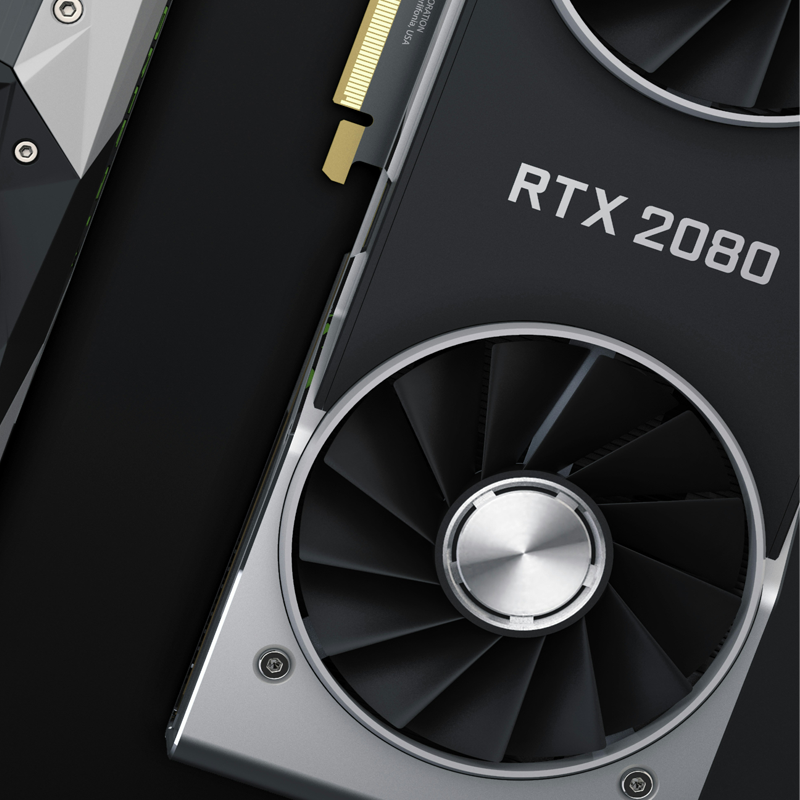

Over a decade ago, NVIDIA was worth around USD 10 billion, making most of its revenue as a leading figure in the gaming industry.
Fast forward to 2025, the company is now worth over USD 2 trillion, making it one of the world’s most valuable companies.
Even though NVIDIA is primarily associated with gaming, what actually propelled it to the top of the tech sector is the artificial intelligence (AI) boom.
However, that’s only part of the story…
To truly understand how NVIDIA attained the success it enjoys today, we need to take a look at its co-founder and current CEO.
This business leader’s name?
Jensen Huang!

Photo from Stanford Institute for Economic Policy Research
Born on February 17, 1963, Huang is a Taiwanese and American businessman, electrical engineer, and one of the co-founders of NVIDIA, one of the world’s largest semiconductor companies.
As the son of Taiwanese American immigrants, he spent his childhood in Taiwan and Thailand before moving to the U.S.
Growing up, Huang excelled academically, having interest in mathematics, computers, and science. Moreover, he endeavored not only in his studies, but also in working hard to make a living, as he got his first job working the graveyard shift at a Denny’s restaurant as a dishwasher, busboy, and waiter from 1978 to 1983.
Huang’s passion and curiosity for technology eventually led him to pursue a degree in electrical engineering at the Oregon State University.
After obtaining his college degree in 1984, Huang worked as a microchip designer in Silicon Valley while simultaneously pursuing his master’s degree—which he obtained in 1992—in electrical engineering at Stanford University.
In 1993, Huang, together with Chris Malachowsky and Curtis Priem cofounded, NVIDIA.
During its early years, NVIDIA specialized in the design of graphics processing units (GPUs)—a piece of tech designed for rendering videos and images, and is commonly associated with gaming.
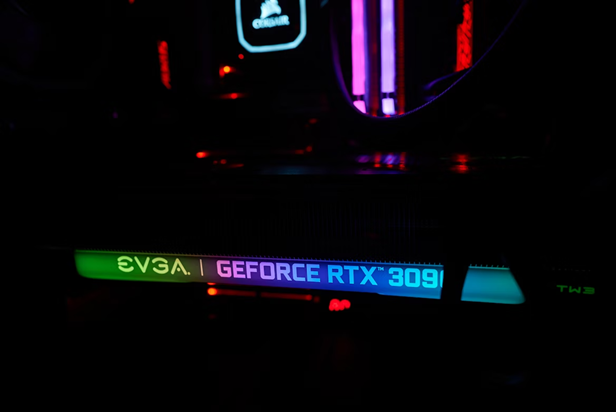
Photo from Unsplash
Eventually, the company made a name for itself for designing and selling high performance GPUs for content creation and gaming.
By the mid-2010s, NVIDIA had solidified itself as market leader in the gaming industry.
However, Huang didn’t rest on his laurels as he and his team recognized the application of his company’s GPUs to non-graphical workloads such as processing massive amounts of data in computational finance, machine learning, AI, cryptocurrency, cloud computing, and scientific computing.
By investing company resources to develop products for non-gaming workloads, Huang positioned NVIDIA to capitalize on the cryptocurrency mining craze in the late 2010s and the subsequent AI boom that started with the public release of OpenAI’s ChatGPT in 2022.
Today, NVIDIA is no longer just a gaming-focused company; it’s a full-fledged tech juggernaut that’s worth over USD 2 trillion and has expanded not only in the fields of AI and cloud computing but also in autonomous driving, healthcare, and robotics.
So, what was the key to Huang’s success?
According to him, the biggest driver of his success was inexperience, or rather, the ignorance associated with it.
In various interviews, Huang has constantly emphasized that he and his cofounders had no idea how to run a business when they founded NVIDIA.
Instead of letting this inexperience get the better of him, Huang used it to fuel his company’s success, weathering all the ups and downs that came with running his company and learning all that he can from the failures and hardships he faced.
Aside from learning from his failures and struggles, Huang believes in the importance of thinking outside the box, empowering others, and constantly upskilling.
Perhaps more importantly, despite being CEO, Huang spends a considerable amount of time soliciting and reading employee emails that contain notes about the top five things his employees are working on, thinking about, and noticing in their corners of the business.
By integrating this into his leadership style and management strategy, he’s able not only to keep himself updated on the latest industry trends but also on what’s going on inside his company.
Clearly, Huang is in a position to maintain the dominance of NVIDIA and continue pioneer innovations in the tech industry.
In a time of intense competition and uncertain business prospects, he and his company stand strong as a “Marvel” of the tech industry.
His willingness to learn, collaborate, and empower others sets him apart and puts him in a class of his own.
So, if you want someone to look up to or emulate, look no further than Huang’s success story!
About The Dynamic Marketing Communiqué’s
“Mondays: Marketing Marvels”
Too often, industry experts and the marketing press sing the praises of some brand or company’s marketing strategy.
… only for the audience to later find out that its product was a flop, or worse, that the brand or company went bankrupt.
The true ROI in marketing can’t be separated from the business as a whole.
What good is a marketing case study if one can’t prove that the company’s efforts actually paid off?
At the end of the day, either the entire business is successful or it isn’t. And the roles of marketing and communication are always paramount to that success.
Every Monday, we publish a case study that highlights the world’s greatest marketing strategies, marketers, and communicators.
However, the difference between our articles and the numerous ones out there is that we will always make certain that the firm really did generate and demonstrate earning power worthy of study in the first place in keeping with a person’s leadership skills in the area of marketing and/or communication.
We’ll also study the greatest marketing fails and analyze what they did wrong, or what they needed to improve. We all make mistakes, but better we learn from others’ mistakes—and earlier, rather than later.
Hope you find this week’s topic interesting and helpful.
Stay tuned for next Monday’s “Marketing Marvels!”
Cheers,
Adrian Kyle Vergara
Content Writer
Valens Dynamic Marketing Capabilities
Powered by VX Dynamic
www.vxdynamic.com
